
Introduction
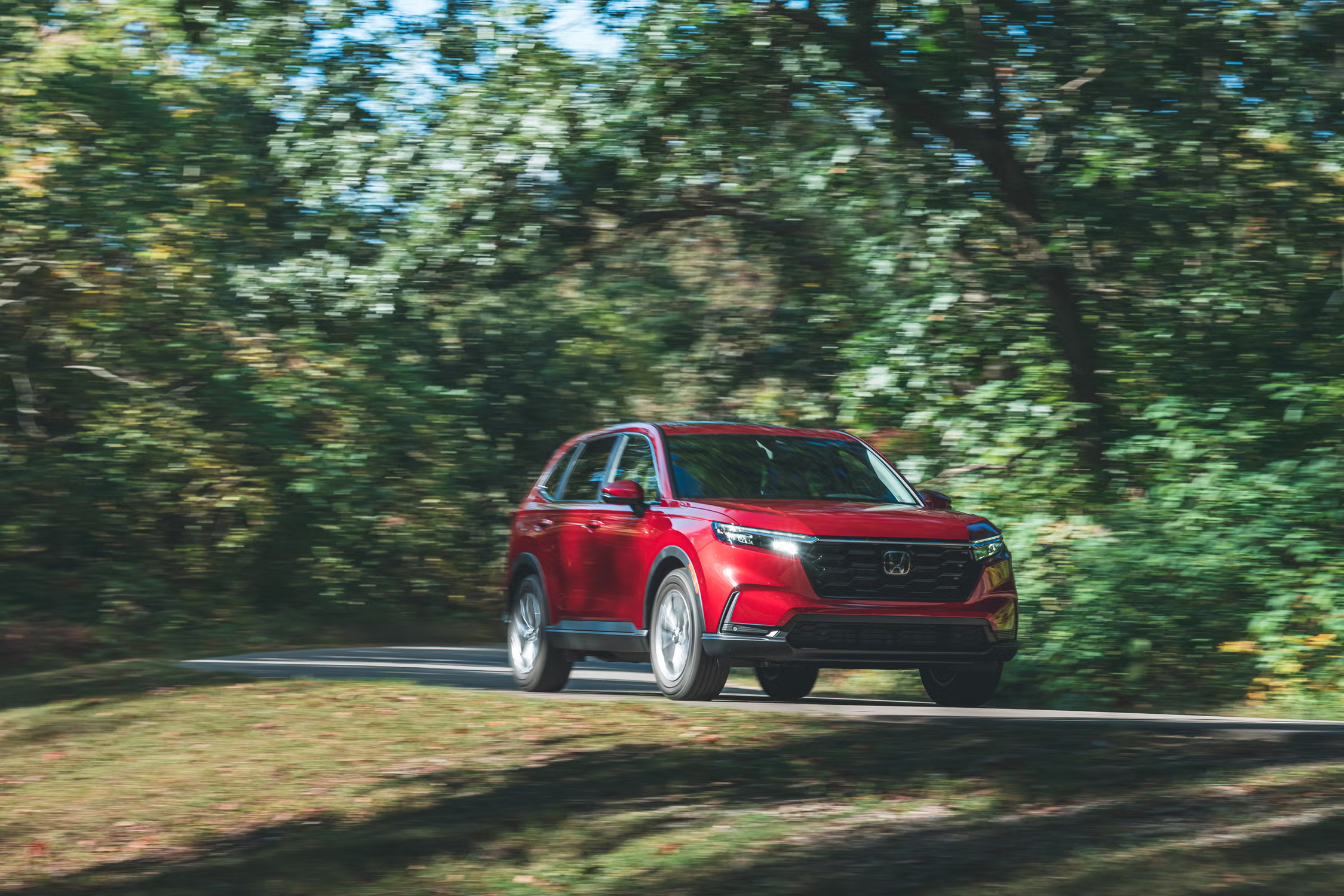
For Kenyan car buyers, the price tag on a potential vehicle like the Honda CRV is never just one number; it is a complex calculation involving import duties, exchange rates, local dealer markups, and vehicle condition—factors that can inflate the final cost by hundreds of thousands of shillings if not managed correctly.
Many Kenyans are drawn to the CRV for its reliability, excellent resale value, and practical size, making it a perfect fit for both urban commutes in Nairobi and weekend trips upcountry, but the local market often presents a confusing array of options with unclear histories.
This complexity is precisely why detailed research into the true cost, especially the cost incurred through direct importation from trustworthy sources like Japan, is absolutely vital before committing your hard-earned cash, helping you secure a vehicle whose quality matches its premium price tag.
We often encounter clients who were almost misled by attractive, low advertised prices from local car yards, only to discover later that the vehicles had extensive accident history or mileage manipulation, which significantly impacts their real-world value and long-term running costs here in Kenya.
When dealing with a vehicle like the CRV, which holds its value remarkably well, paying a slightly higher initial sum for a guaranteed, high-grade unit from the Japanese auctions is invariably the smarter financial decision than gambling on a cheaper, unknown entity found locally.
By focusing on the landed cost (CIF and duty) through transparent experts, you gain control over the price equation and ensure you are investing in a vehicle that will serve you faithfully for many years on Kenyan roads.
2026 Honda CRV Pricing Overview
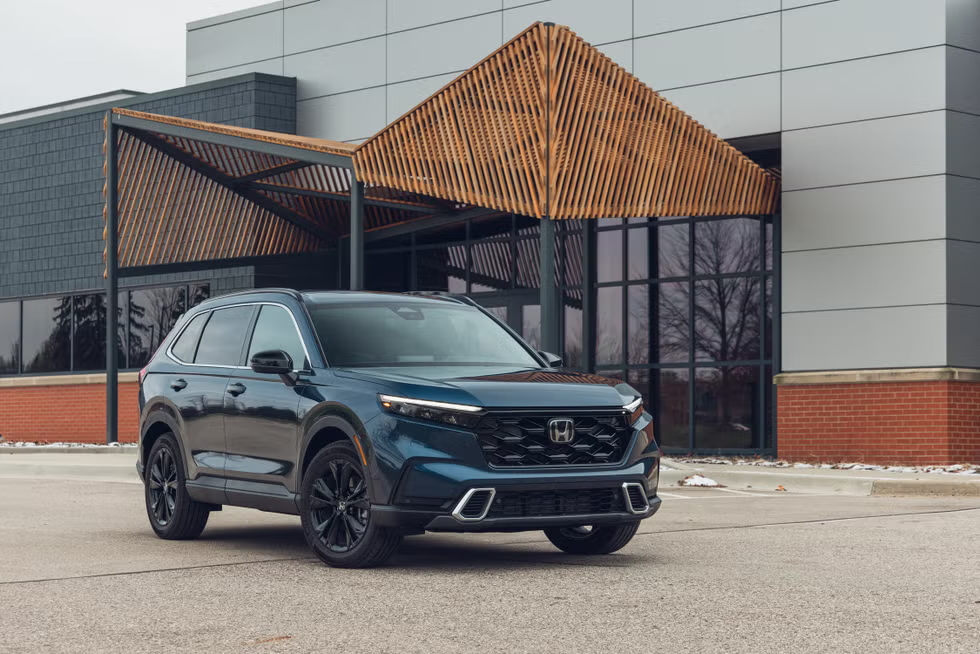
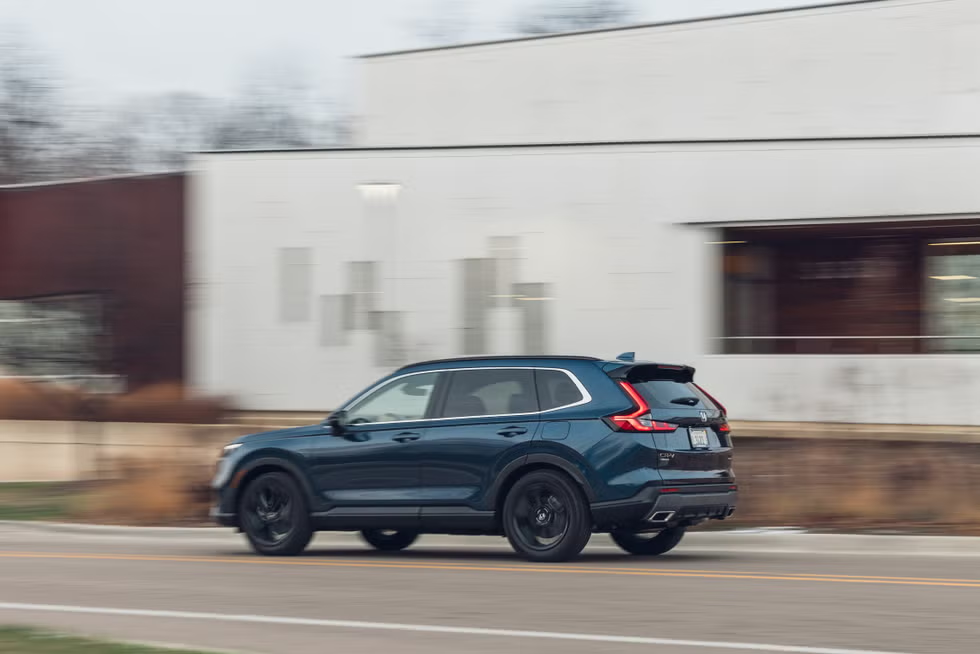
The pricing for the latest 2026 Honda CRV models, which have seen significant upgrades in design and technology, is primarily handled through authorized local distributors and is targeted at the luxury segment, making the cash price substantially higher, often exceeding KES 7 million once taxes and local handling fees are factored in.
However, the sweet spot for the average Kenyan buyer is often the slightly used, lower mileage models manufactured between 2019 and 2025, as these fall perfectly within the 8-year rule for importation while offering modern amenities and proven durability.
These specific year models, when sourced directly from the Japanese auction, provide the best balance of affordability and contemporary features, landing in Kenya typically in the KES 3.4 million to KES 4.5 million range, depending on engine size, drive configuration (2WD vs. AWD), and overall auction grade.
When assessing the Honda CRV Price, it is important to remember that the model’s enduring popularity means that older generations still command a respectable figure in the local second-hand market, though this is where buyer caution becomes paramount due to the risk of poor maintenance history.
A key differentiator in pricing, especially when looking at the fifth generation (2017–2022), is the engine option, particularly the shift towards turbocharged variants, which often affects the resale appeal and, consequently, the price buyers are willing to pay.
To get the best deal and avoid paying inflated local prices, many Kenyans are now turning to specialized importers who can secure these excellent condition units directly, ensuring that the final, landed price reflects the true quality and mileage verified by the Japanese inspection reports.
Trim Levels and Their Impact on Price
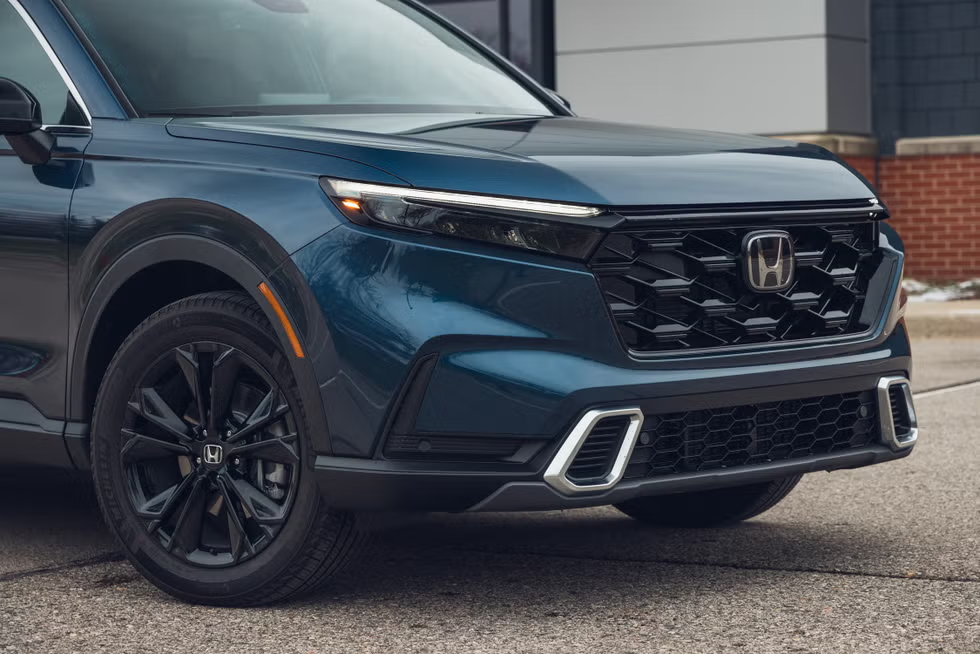
The specific trim level of a Honda CRV plays a massive role in determining its final price, whether new or used, because higher trims include features that increase the initial cost and, consequently, the calculation of import duty applied by KRA.
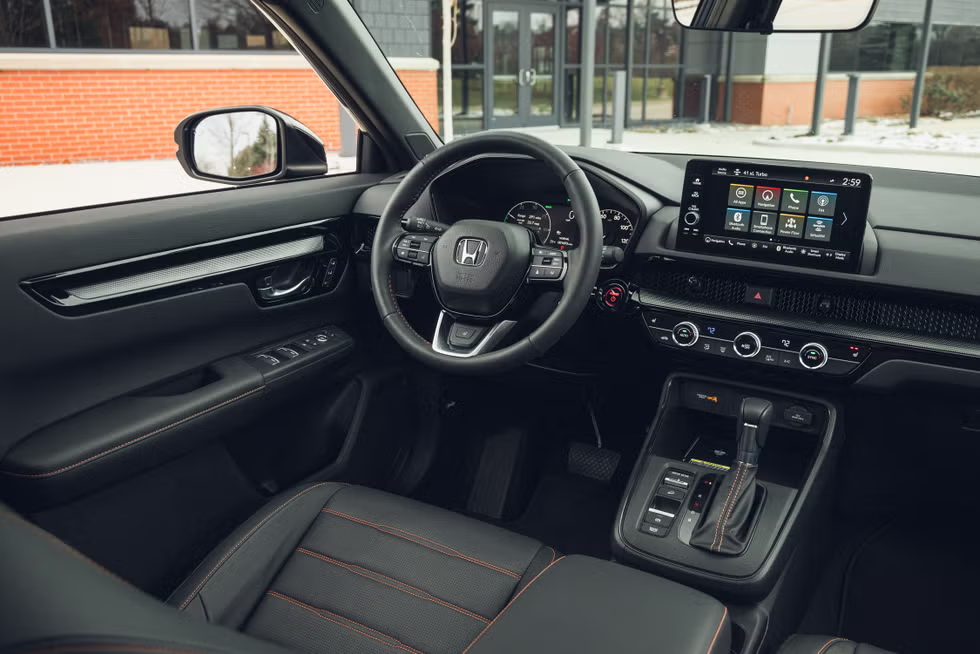
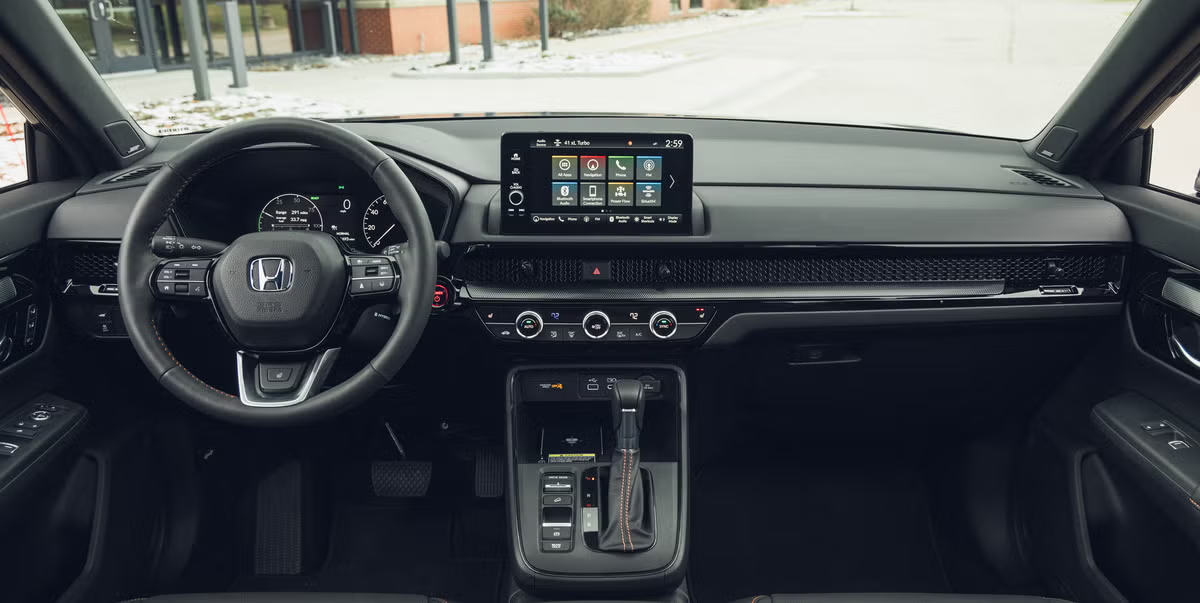
Common trims like the LX (base model), EX, EX-L, and the top-tier Touring model offer escalating levels of luxury, technology, and safety features, such as leather interiors, panoramic sunroofs, advanced driver assistance systems, and upgraded infotainment screens.
While an LX might be the most budget-friendly option, offering solid value for money, a Touring model will fetch a premium price both at the auction and upon landing in Mombasa, simply due to the higher Cost, Insurance, and Freight (CIF) value declared.
For Kenyan buyers, understanding the trim levels is essential for balancing budget against desired features, and importers like Enan Motors specialize in helping clients identify high-value trims that are currently performing well in the Japanese auctions.
For instance, sometimes a well-equipped EX-L from 2019 might only be marginally more expensive than a basic 2018 EX, representing a significant uplift in feature set for minimal extra cost.
Crucially, the presence of certain factory options can sometimes inadvertently affect the duty calculation, which is why transparency throughout the entire process—knowing the original invoice price and verified options—is crucial when finalizing the real Honda CRV Price you will pay.
Regional Price Variations and Taxes
The most significant variable affecting the final Honda CRV Price in Kenya, far beyond the initial purchase cost in Japan, is the tax regime imposed by the Kenya Revenue Authority (KRA), which includes Import Duty, Excise Duty, and Value Added Tax (VAT), all calculated based on the vehicle’s depreciated value (DVP).
Unlike neighboring markets, Kenya’s tax structure is complex and often subject to fluctuations in the US Dollar-KES exchange rate, meaning that even if the auction price remains stable, a weakening shilling can dramatically increase your final landed cost.
This financial reality makes fixed-price quotes from trusted importers highly valuable, as they absorb the complexity of currency risk and duty calculation for the client.
Moreover, local prices in Kenyan car yards often incorporate a significant regional markup that accounts for their overheads—things like rent for the yard, staff salaries, financing costs, and a substantial profit margin.
When you import a vehicle like a popular Toyota Harrier or a CRV directly, you bypass these unnecessary layers of cost, leading to genuine savings, often upwards of 15% to 20% compared to buying the same quality vehicle locally.
This direct import advantage is further compounded by location; while the initial costs remain centralized through the port of Mombasa, the retail price in Nairobi or Kisumu car yards will always be higher than the transparent, all-inclusive pricing offered by companies facilitating the direct Import process.
Financing, Leasing, and Incentives
Securing financing for a Honda CRV purchase in Kenya often involves navigating several channels, primarily commercial banks, Saccos (Savings and Credit Co-operative Societies), and a handful of specialized micro-finance institutions, each offering different terms, interest rates, and collateral requirements.
Commercial bank loans typically offer competitive interest rates, usually requiring the vehicle itself as collateral and often funding up to 80% of the vehicle’s value, provided the buyer has a strong credit history and stable employment.
However, processing times can be lengthy, and the bank must be comfortable with the valuation of the vehicle, which is often easier to prove with documented direct imports than with locally purchased units of questionable history.
Saccos, on the other hand, frequently offer more flexible terms, leveraging a member’s savings or guarantors to facilitate the loan, making them a popular choice for employed Kenyans looking to manage the Honda CRV price over several years, although their effective interest rates can sometimes be higher than bank rates.
Unfortunately, manufacturer incentives like zero-percent financing or substantial rebates, common in Western markets, are virtually non-existent for imported Japanese used vehicles in Kenya, making outright purchase or structured loan financing the only viable options.
If you are considering purchasing a durable and popular brand like Mitsubishi or Honda, securing pre-approval for financing based on a clear, verifiable CIF price from Japan is the most strategic approach to streamline your purchase.
Comparing New vs. Certified Pre-Owned CRV Prices
The chasm between the price of a brand-new Honda CRV bought through a Kenyan dealer and a high-grade, certified pre-owned unit imported directly from Japan is substantial, often representing a savings of over KES 3 million, which makes the used import market overwhelmingly attractive.
A locally sourced “new” vehicle carries the benefit of a local warranty, but this often comes at a premium that many Kenyan budgets cannot justify, especially considering the inherent reliability of Japanese-manufactured vehicles.
Conversely, the term “Certified Pre-Owned” in the context of direct importation means the vehicle comes with a verifiable auction sheet from Japan, detailing its exact mileage, condition (Grade 4 or higher is ideal), and history, giving the buyer absolute clarity before the purchase decision.
When you buy a locally used CRV from a yard, you often lack this crucial transparency; the quality is based purely on visual inspection and the seller’s assurance, which is a risky gamble.
Enan Motors eliminates this risk entirely, allowing you to choose exactly the make and model you want, from a vast inventory of available cars in Japan, ensuring you know the true condition—not just the advertised condition—of your next vehicle.
For example, why pay the local yard markup for a 2018 model with 80,000 unverified kilometers when you can import a Grade 4.5, 2019 model with 45,000 verified kilometers for a lower landed Honda CRV Price?
How to Get the Best Deal on a Honda CRV
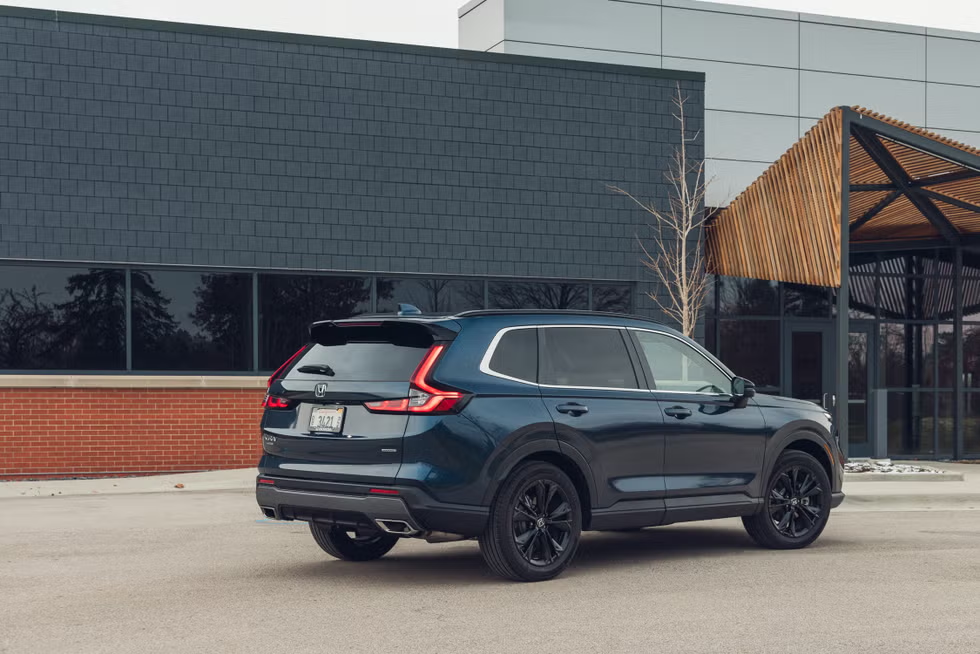
Securing the best possible deal on a Honda CRV requires moving beyond the traditional Kenyan buying methods and embracing the global supply chain, which fundamentally means buying your vehicle at source, where the price is determined by auction dynamics rather than local retail markups.
The first step involves setting a realistic budget that includes all landing costs (FOB, freight, insurance, and KRA duty) and then utilizing the expertise of an importer who specializes in Japanese auctions, as they have access to thousands of vehicles weekly, greatly increasing the chances of finding the perfect match.
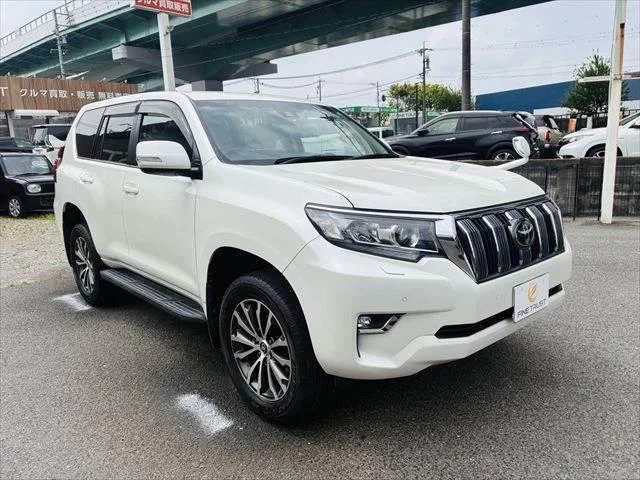
Don’t be fixated on models readily available in Kenyan showrooms; instead, search for popular imported alternatives like the Honda Vezel or the CRV’s primary competitor, the Toyota Land Cruiser Prado, to broaden your options.
Furthermore, timing your purchase is crucial; sometimes, a slight delay or willingness to wait for the next auction batch can yield a superior grade vehicle for the same price, a nuanced detail only an experienced importer can advise on.
The best deal is never the lowest initial price; it is the most transparent, all-inclusive price for the highest quality vehicle, ensuring you avoid costly future repairs due to hidden damage.
If you are serious about minimizing the Honda CRV Price while maximizing quality and getting an honest assessment of landed costs, don’t hesitate to reach out to our team at Enan Motors. Message us on WhatsApp today to discuss specific year models and get a free, detailed, duty-inclusive quote.
Future Price Trends and Resale Value
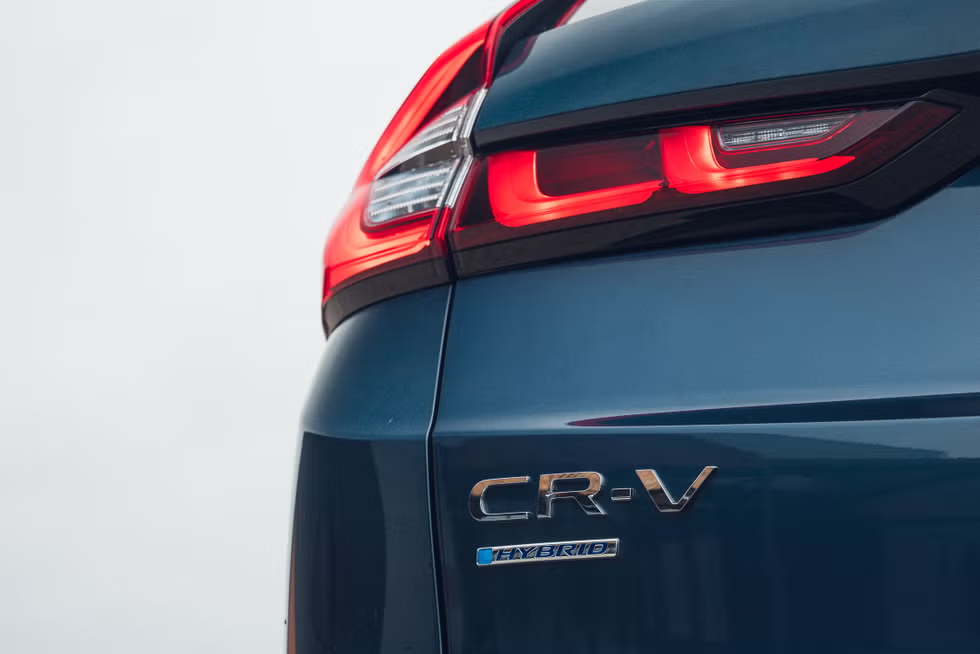
The Honda CRV has historically demonstrated exceptional resale value in the Kenyan market, a characteristic that makes it a very smart purchase, regardless of whether you choose a new or used unit, because depreciation rates remain relatively low compared to many European or less popular models like the Volkswagen range.
This strong resilience in value is primarily driven by the brand’s reputation for mechanical dependability, the easy availability of spare parts throughout Kenya, and the high demand for reliable, mid-sized SUVs.
We anticipate that this trend will continue, especially for well-maintained, lower-mileage units that have documented service history and clear auction sheets, which reinforces the long-term financial wisdom of direct importation.
Future price trends suggest that as newer models enter the Kenyan market and more hybrids become available, the price of the older, purely petrol-powered models will stabilize, making the 2017–2020 generation a safe investment for the next three to five years.
For clients worried about the initial Honda CRV Price, factoring in the vehicle’s strong exit strategy (high resale) often makes the initial investment much more palatable, unlike luxury brands such as Mercedes Benz that suffer steeper depreciation curves here.
Choosing a high-demand colour and a popular trim level (like the EX or EX-L) will further enhance your vehicle’s marketability when you eventually decide to sell or upgrade, protecting your equity.
Conclusion
Ultimately, securing the right Honda CRV Price in Kenya is a process that demands transparency, due diligence, and expert guidance, moving far beyond simply accepting the first price tag presented at a local car yard.
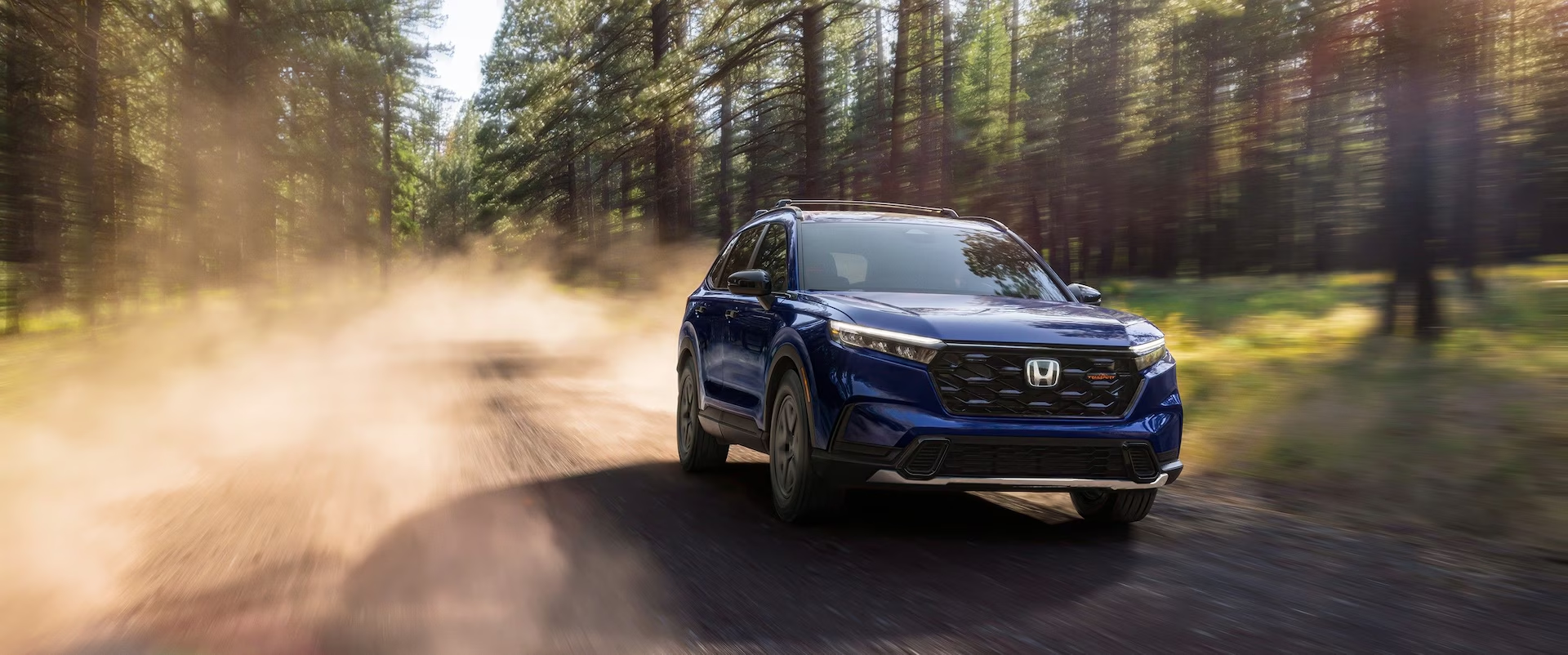
The CRV remains an outstanding choice for its blend of practicality, reliability, and robust resale value, but the smartest financial path involves leveraging the benefits of direct importation from Japan, ensuring you receive a vehicle whose verifiable quality matches the price you pay, free from hidden defects or inflated local markups.
By choosing Enan Motors, you gain an experienced partner dedicated to transparency, providing you with verified auction sheets and clear, all-inclusive pricing before the vehicle even leaves Japan, eliminating guesswork and giving you absolute confidence in your significant investment.
If you are ready to stop guessing and start driving a high-quality Honda CRV that meets your budget and expectations, trust the experts who understand the nuances of the Kenyan import market.
We handle all the complexities of duty calculation, shipping, and logistics, delivering your perfect vehicle straight to your doorstep in Kenya. Call us today or Email us to begin the process of finding your ideal CRV with guaranteed transparency and value.
FAQ
- What is the typical KRA duty applied to a Honda CRV in Kenya?
The duty applied to a Honda CRV in Kenya is calculated based on its deemed Current Retail Selling Price (CRSP) and the depreciation rate, encompassing Import Duty (25%), Excise Duty (which varies based on engine size but typically around 20%), and Value Added Tax (VAT, 16%), resulting in total taxes that can easily exceed 100% of the vehicle’s landed cost (CIF value).
For a popular 2018 model CRV with a 1.5L engine, the total duty component alone often falls in the range of KES 1.5 million to KES 2 million, highlighting why the exchange rate dramatically affects the final price and requiring an expert calculation to avoid unexpected costs.
- Is it cheaper to buy a Honda CRV from a local yard or import it directly from Japan?
In nearly all circumstances, importing a verified, high-grade used Honda CRV directly from Japan is significantly cheaper than purchasing an equivalent unit from a local car yard, provided you work with a trustworthy, transparent importer who provides auction sheet verification.
Local yards add substantial markups—covering their rent, staff, and profit—which you bypass entirely through direct importation, often resulting in savings of 15% to 25%, besides the crucial advantage of knowing the true quality and history of the vehicle before it lands.
- Which year models of the Honda CRV are most popular for import into Kenya?
The most popular year models of the Honda CRV for importation into Kenya currently are those falling within the 8-year rule that offer modern features, specifically models manufactured between 2017 and 2020.
These fifth-generation models often feature the efficient 1.5L turbocharged engine and modern safety features, striking the perfect balance between price, fuel economy, and technology, making them highly desirable among Kenyan buyers who seek reliability without the high cost of a brand-new vehicle.
- How can I verify the actual mileage and condition of a used Honda CRV from Japan?
The most reliable way to verify the actual mileage and condition of a used Honda CRV from Japan is through the mandatory Japanese Auction Sheet (JAS) and the corresponding Export Certificate, which are provided by transparent importers like Enan Motors.
The JAS provides a numerical grade (e.g., 4.5 or 5), a detailed diagram of any body damage (A, B, or C ratings), and the confirmed odometer reading at the time of auction, providing a crucial level of quality assurance that is unavailable when purchasing from many local Kenyan yards.
- How does the CRV compare in price and maintenance to other popular SUVs in Kenya, like the Toyota?
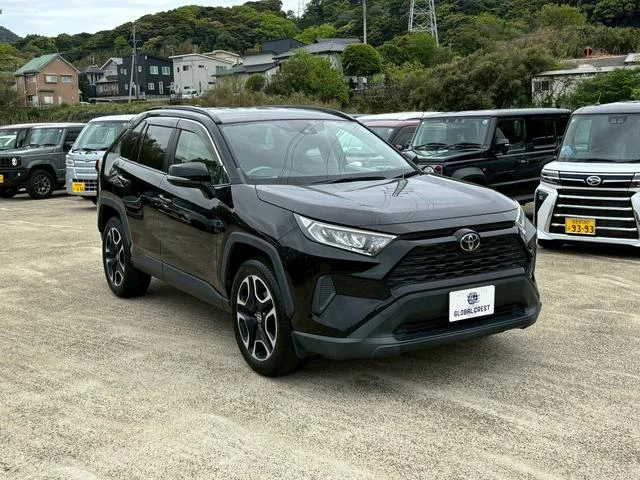
The Honda CRV generally positions itself slightly above the likes of the Toyota RAV4 in terms of initial purchase price, especially for newer generations, primarily due to its slightly more premium feature set and strong global demand.
In terms of maintenance, both the CRV and Toyota models offer excellent reliability and reasonable running costs in Kenya due to the widespread availability of skilled mechanics and spare parts, making both excellent choices for long-term ownership, though the CRV often appeals to buyers seeking a marginally more refined driving experience than its direct competitor.