


Introduction to the Toyota Prado J150 and Its Popularity
In the Kenyan motor vehicle market, few models command the respect, reliability, and sheer presence of the Toyota Land Cruiser Prado J150.
This SUV is not just a mode of transport; it’s a statement of capability, perfectly suited to navigating Nairobi’s chaotic urban sprawl one day and tackling the rugged, unforgiving terrain of upcountry Kenya the next.
Its legendary build quality and impressive off-road prowess make it a favourite among professionals, farmers, and government officials alike, creating high demand both for locally registered units and fresh imports from Japan.
However, the one question that consistently dominates pre-purchase discussions, especially in our high-cost fuel environment, is about the real-world Toyota Land Cruiser Prado fuel efficiency.
Understanding the specific factors that drive the running costs of this machine is crucial, as the difference between 8 km/l and 10 km/l can translate into hundreds of thousands of shillings annually.
For potential owners in Kenya, making the decision often boils down to balancing the need for rugged durability with the economic reality of daily commuting.
The J150 model, especially the TX and TZ variants frequently imported, represents a significant investment, and prudent buyers are right to scrutinize its thirst.
While the nameplate guarantees exceptional resale value and low mechanical downtime, operating costs remain a major consideration.
This is where direct importation, managed by experts like Enan Motors, offers a crucial advantage: transparency regarding the exact engine condition and documented mileage straight from the Japanese auction sheets.
When you know the genuine history of the 3.0L D-4D engine before it hits Kenyan shores, you gain confidence that its fuel consumption figures will align with manufacturer standards, rather than suffering from hidden wear and tear often masked in local car yard purchases.

Official Fuel Consumption Figures and How They Are Tested
When you look up specifications for the Prado J150, you will inevitably encounter official fuel consumption figures, usually quoted under standardized testing cycles like the Japanese JC08 or the European NEDC/WLTP standards.
These figures often promise impressive returns—sometimes hitting 14 km/l or even higher for diesel variants—which can be misleading for the average Kenyan driver.
These laboratory tests are conducted under highly controlled conditions, without the burden of real traffic, high altitudes, hot weather, aggressive driving, or the typical low-quality local fuel that defines our driving environment.
Consequently, relying solely on manufacturer figures for the Prado is a recipe for budget shock when the car finally hits the road between Mombasa Road and Thika Highway.
The figures represent an ideal, not a reality, and experienced Kenyan drivers know to apply a minimum 20% penalty to these published statistics right off the bat.
This gap between official tests and real-world performance underscores the need for transparency when buying a vehicle, particularly a large SUV like the Prado J150.
When you opt to import directly from Japan through a trusted partner, you receive detailed auction sheets and verified reports that give a true picture of the car’s mechanical life up to that point.
This documentation provides a much stronger indication of the engine’s health than any generic brochure.
Knowing that the engine has been well-maintained and has genuinely low mileage helps ensure that the vehicle performs closer to its peak efficiency, rather than struggling with consumption issues caused by accumulated wear and tear.
This level of verifiable quality control is simply not available when buying a pre-registered unit whose history is often obscured or undocumented.

Real-World Fuel Economy: What Owners Experience
The true measure of Toyota Prado J150 fuel consumption in Kenya varies significantly depending on the operational environment.
In heavy Nairobi traffic—the classic stop-and-go scenario where the engine is often idling for minutes on end—owners of the 3.0L diesel model typically report figures ranging from 8 km/l to 9 km/l.
This consumption rate reflects the massive weight of the vehicle and the constant demand placed on the engine when maneuvering in low gears.
Conversely, when the same vehicle is taken on a smooth highway cruise, perhaps heading towards Nakuru or Eldoret, the efficiency jumps dramatically, often settling comfortably around 11 km/l to 12 km/l, especially if the driver maintains a steady speed around 100 km/h.
This difference highlights how crucial driving location and style are to the final fuel bill.
Petrol variants, primarily the 2.7L (often found in earlier TX models) and the more powerful 4.0L V6 (in higher-spec TZ models), tell a slightly different story.
While they offer smoother, quieter acceleration, they are inherently less fuel-efficient than their diesel counterparts.
The 2.7L petrol engine usually delivers 7-8 km/l in mixed driving, while the 4.0L V6 can drop as low as 6-7 km/l, especially when driven aggressively.
Therefore, local buyers prioritising long-term cost savings usually gravitate towards the diesel engines, despite the slightly higher initial cost, because the cumulative savings on fuel far outweigh the initial premium.
When selecting your imported J150, Enan Motors helps clients meticulously evaluate their intended use to ensure they choose the engine variant that offers the best balance of power and economy for their specific needs, ensuring they avoid unnecessary expenses down the line.
Factors That Influence Prado J150 Fuel Consumption
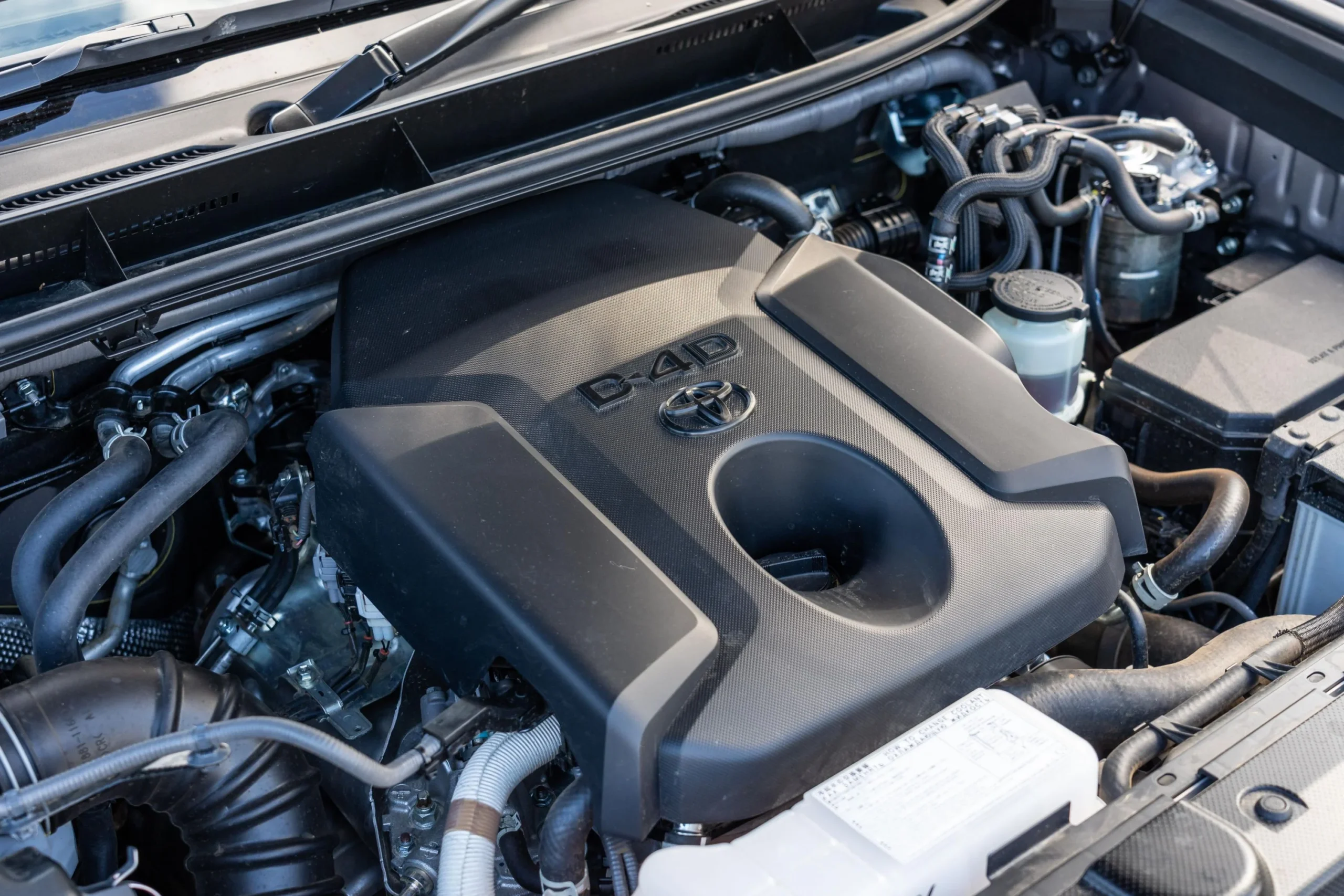
Several factors beyond the engine type heavily influence the final Toyota Prado J150 fuel consumption figure.
Driving behaviour sits at the top of the list; heavy acceleration and late braking waste significant energy, while smooth, predictive driving can easily improve efficiency by 15-20%.
Tire choice and pressure are equally critical, especially in Kenya where drivers often adjust pressure for rougher roads.
Under-inflated tyres increase rolling resistance, forcing the engine to work harder, and choosing aggressive, large-profile all-terrain tyres—while beneficial off-road—will inevitably reduce your average mileage on tarmac.
Furthermore, maintaining proper engine health is paramount: clogged air filters, old spark plugs, or neglected fuel injectors can all lead to inefficient fuel burning, which directly impacts consumption.
Ignoring a simple service could lead to the engine requiring 1 km/l more fuel than necessary, translating into serious long-term losses.
Another often overlooked factor is vehicle weight and modifications.
Many Kenyan Prado owners fit heavy accessories like roof racks, bull bars, winches, and extra jerry cans, especially for long safari trips.
Every kilogram added requires the engine to expend more energy to move the mass, drastically reducing fuel efficiency.
Even minor engine tuning or the installation of non-standard accessories can throw off the car’s computer calibration, leading to sub-optimal fuel metering.
When sourcing your perfect vehicle, whether it is a robust Prado or perhaps a more compact SUV like a Mazda CX 5, confirming its factory specification and ensuring it has been rigorously serviced throughout its life are crucial steps in securing optimal running costs.
This diligence is a cornerstone of the Enan Motors import process.
Comparing Diesel and Petrol Engines in the J150
The choice between the diesel and petrol engines in the Prado J150 often dictates the long-term cost trajectory for Kenyan buyers.
The 3.0L D-4D diesel engine (1KD-FTV) is the undisputed champion of efficiency and torque, offering the best Mazda fuel consumption figures and better low-end grunt for tackling steep inclines or towing.
Diesel engines, by their nature, are more efficient because diesel fuel contains more energy per litre than petrol, and they operate at higher compression ratios.
However, diesel engines require stringent maintenance, especially regarding fuel quality and filter replacements, as neglected filters can lead to expensive injector issues down the line.
Petrol engines, such as the reliable 2.7L (2TR-FE), are simpler mechanically, quieter, and generally cheaper to maintain initially, but their inherent thirst means they cost substantially more to run over many years of Kenyan driving, particularly given the large size and aerodynamic drag of the J150 chassis.
For most clients purchasing a Prado J150 for daily use, the diesel variant provides a superior economic advantage, even considering the slightly higher price point or the potential cost of diesel-specific maintenance.
When considering importing a low-mileage unit, this decision becomes even clearer.
A well-maintained diesel engine sourced directly from Japan offers decades of reliable service, maximizing the fuel efficiency gains.
At Enan Motors, we guide clients through auction data that often confirms the superior condition and comprehensive service history of diesel J150s from the Japanese market, ensuring you secure a vehicle whose mechanical integrity guarantees optimal performance and economy, unlike vehicles whose history might be questionable.
Furthermore, the 4.0L V6 petrol engine, while powerful, is typically reserved for those who prioritize performance and refinement over budget, as its consumption makes it difficult to justify for high-mileage users.

Tips to Improve Fuel Efficiency in Your Prado J150
Maximising the efficiency of your Honda Prado J150 requires a disciplined approach, especially when driving in the demanding Kenyan environment.
Firstly, ensure your tyre pressures are meticulously checked and adjusted regularly.
While lower pressure might offer a slightly softer ride on poor roads, sticking to the manufacturer’s recommended pressures (found usually on the driver’s side door jamb) for on-road use drastically reduces rolling resistance, saving fuel.
Secondly, practice ‘smooth sailing’: avoid sudden braking and accelerating, anticipate traffic lights, and maintain a constant, moderate speed on highways, ideally using cruise control if your J150 is equipped with it.
Lastly, clear out unnecessary clutter; that toolkit, those heavy spare parts, and the boxes you occasionally carry add up.
A lighter car always uses less fuel, which is a simple rule of physics.
Regular maintenance is not just about reliability; it is essential for optimal prado j150 fuel consumption.
A clean air filter allows the engine to breathe easier, while a correctly tuned engine ensures the perfect fuel-air mixture is being burned, maximizing energy extraction from every drop of diesel or petrol.
Ensure your vehicle undergoes preventative maintenance before any long upcountry trip.
If you are uncertain about the true efficiency or health of a potential import, consulting with an experienced import expert is the best way to reduce risk.
Before you commit to shipping a vehicle, consider reaching out to Enan Motors; we can analyze the auction sheets and mechanical reports to predict real-world fuel performance, ensuring you receive a vehicle that meets your economic expectations. Message us on WhatsApp today to discuss specific model efficiencies.
Cost of Fuel Over Time: Calculating Annual Expenses
To truly appreciate the impact of Honda Vezel Prado J150 fuel consumption, we must translate km/l into real shillings spent over a typical year.
Assuming the average Kenyan driver covers 15,000 kilometres annually, and taking an average cost of Ksh 200 per litre for fuel: A diesel Prado averaging 10 km/l will require 1,500 litres of fuel, costing approximately Ksh 300,000 per year.
Conversely, a petrol Prado averaging 8 km/l will require 1,875 litres, pushing the annual cost closer to Ksh 375,000.
That Ksh 75,000 annual difference compounds rapidly, reinforcing the financial benefits of choosing the more efficient diesel engine, or even better, ensuring you import the cleanest, lowest-mileage unit possible through a transparent process.
This is where the direct importation model offered by Enan Motors provides a compounding economic benefit.
While the savings on fuel accrue over the vehicle’s lifespan, the immediate saving achieved by skipping the local car yard markup can be substantial.
Local dealers have massive overheads—rent, staff, inventory holding costs—all baked into the final price, often adding hundreds of thousands to the vehicle’s cost.
By utilizing our streamlined Import process, you bypass these yard overheads entirely.
The significant capital savings made on the purchase price can effectively cover several years of fuel costs, fundamentally altering the total cost of ownership equation.
This smart approach ensures you get a superior quality vehicle at a lower initial cost, giving you greater peace of mind and cushioning against inevitable fuel price fluctuations.
Common Misconceptions About Prado J150 Mileage
One of the most persistent misconceptions about the Prado J150 fuel consumption is that all diesel engines of the same age perform identically.
In reality, the maintenance history, the quality of previous fuel used, and the driving environment dramatically affect efficiency.
A J150 that spent its early years in congested city traffic will typically have a less efficient engine than one used primarily on Japanese highways, even if they share the same age and reported mileage.
Another myth is that higher octane petrol automatically yields better efficiency; for the J150’s standard engines, sticking to the manufacturer’s recommended fuel grade is sufficient, and paying extra for premium fuel is often an unnecessary expense, yielding marginal returns at best.
A crucial misconception many buyers encounter when sourcing locally is the belief that higher mileage automatically means poor fuel economy.
While high mileage does introduce more wear, a high-mileage vehicle that was rigorously serviced every 5,000 km will often outperform a low-mileage unit that was neglected.
The real secret to optimal efficiency lies in verifiable history and transparent condition reporting.
At About Enan Motors, we focus on units with confirmed maintenance schedules, giving you the assurance that the engine components—from the turbocharger to the injectors—are working harmoniously.
Do not trust generalized advice; instead, trust the data provided by verified Japanese auction houses, which we make available to all our clients looking at our Inventory.
Conclusion
Making an informed decision on the Toyota Prado J150 requires a clear-eyed understanding of its true running costs, focusing specifically on the real-world prado j150 fuel consumption experienced under Kenyan driving conditions, not idealistic factory figures.
While the J150 is undoubtedly a thirsty vehicle compared to smaller crossovers, its reliability and capability often justify the expense.
The key to minimizing your long-term cost of ownership lies in two critical areas: selecting the more efficient diesel engine variant and, most importantly, ensuring you purchase a unit with a fully verifiable history of maintenance and low mileage.
By importing directly through a trusted partner like Enan Motors, you gain access to a vast selection of high-quality vehicles in Japan, eliminating guesswork and the risk of inheriting hidden mechanical issues that can quickly destroy fuel efficiency.
We offer the transparency and expertise you need to import your ideal Prado with confidence. Call us today or Email us to start your transparent import journey.

FAQ
- Is the petrol or diesel Prado J150 more economical in Kenya?
The diesel variant, typically the 3.0L D-4D, is significantly more economical for long-term Kenyan use, offering superior mileage (up to 12 km/l highway) and better low-end torque.
- Why is my Prado J150 fuel consumption much higher than the official figures?
Official figures do not account for heavy Nairobi traffic, rough roads, high altitude, aggressive driving, or the added weight of accessories common on Kenyan-driven vehicles.
- Does the mileage of an imported Prado J150 truly reflect its condition?
Verified low mileage from Japanese auction sheets offers a strong indicator of low wear, but condition reports are equally vital, confirming the vehicle’s maintenance history and lack of hidden faults.
- Can regular servicing drastically improve the Prado’s fuel economy?
Yes, ensuring filters are clean, injectors are calibrated, and tyre pressures are correct are low-cost maintenance measures that can improve consumption by 10% or more.
- How much cheaper is it to import a Prado J150 directly compared to buying from a local car yard?
Direct importation eliminates local dealer markups and overheads, often saving the buyer hundreds of thousands of shillings instantly, offsetting potential future fuel costs.