

Understanding Prado Petrol Fuel Consumption Figures
When you look at manufacturer specifications, the fuel consumption figures provided often adhere to controlled laboratory tests, like the Japanese WLTC cycle, which are optimized and seldom reflect the reality of Kenyan driving environments.
For example, a 2.7L Prado (J150 generation) might be officially rated closer to 11 Km/L, but once you factor in the stop-and-go congestion of Mombasa Road or the high altitudes and rough surfaces of Rift Valley roads, that figure realistically drops into the 8 to 9 Km/L range.
This discrepancy is why, as experienced importers and market experts at Enan Motors, we always advise clients to calculate their running costs using the lower real-world average, ensuring there are no unpleasant surprises once the vehicle hits the road in Kenya.
The consumption difference between the two main petrol engine variants—the reliable 2.7L straight-four engine and the robust 4.0L V6 engine—is substantial and dictates the overall running cost for the owner.
The 2.7L engine, while sometimes viewed as underpowered for heavy off-roading, is a favorite among urban Kenyan drivers because of its relatively better economy and proven durability, often delivering consumption close to 9 Km/L on a mixed cycle.
Conversely, the 4.0L V6 offers significantly more grunt for high-speed highway cruising and towing, but those benefits come at the pump, where consumption can easily hover around 7.5 Km/L, especially if the driver employs an aggressive style; this trade-off is central to the decision-making process for anyone looking to import a Prado directly from Japan.

Key Factors That Influence the Prado’s Fuel Economy
Several critical elements contribute to whether your Prado is a fuel sipper or a fuel guzzler, extending beyond the engine size itself.
Firstly, the condition and quality of the vehicle are paramount, which is why buying a vehicle with a verified history is essential; a poorly maintained engine, even a 2.7L, will consume far more fuel than a clean, well-serviced one.
Secondly, the drivetrain plays a role, as the permanent 4WD system of the Prado ensures excellent traction but introduces constant friction, slightly increasing fuel demand compared to part-time 4WD SUVs, which must be accounted for during long trips upcountry.
Lastly, the weight and modifications are major factors, because adding accessories like bull bars, heavy roof racks for safari gear, or oversized, aggressive all-terrain tires significantly increases drag and rolling resistance, forcing the engine to work harder and subsequently drinking more petrol.
Another crucial factor, particularly for imported vehicles, is the true mechanical health of the car upon arrival in Kenya, which is often hard to verify when dealing with local car yard sellers who might mask underlying issues.
At Enan Motors, we prioritize transparency, ensuring clients have access to the detailed Japanese auction sheets and service records; this verification step guarantees you are importing a Prado with accurate mileage and a known mechanical history, thereby avoiding vehicles with hidden engine faults that directly sabotage fuel economy.
If the oxygen sensors are faulty, the injectors are clogged, or the transmission fluid is ancient—all common issues in low-quality imports—the fuel consumption will be unnecessarily high, transforming your powerful Prado into an inefficient money pit.

Comparing Fuel Consumption Across Prado Generations
The Prado model has spanned multiple generations, with the J120 (early 2000s) and the J150 (2009 onwards) being the most common versions seen on Kenyan roads today, and their consumption profiles differ noticeably due to technological advancements.
The older J120 generation, while beloved for its rugged simplicity, often uses older engine technology that is less efficient, meaning the 4.0L V6 J120 might yield closer to 7 Km/L in urban settings, whereas a modern, equivalent J150 benefits from variable valve timing (VVT-i) and better engine management systems.
This improved technology in the J150 means its 2.7L engine often reaches the 9 Km/L mark, making it a distinctly superior choice for buyers prioritizing daily operational costs and highway cruising comfort.
When selecting your import, it is essential to understand the specific engine code within the generation, especially since the 2.7L engine (2TR-FE) and the 4.0L (1GR-FE) have remained staples across several J150 facelifts.
The 2.7L Prado is generally seen as the budget-friendly choice in Kenya, balancing performance with affordability, and is often the smart pick for families who use the vehicle primarily for school runs and occasional trips out of Nairobi.
However, for those needing serious towing capacity, high-speed stability on extended journeys, or superior performance for off-road ventures like those to the Maasai Mara, the 4.0L V6 remains the superior, albeit thirstier, option; understanding these precise specifications through transparent sourcing is critical to getting the right vehicle, which is a key advantage of importing a Toyota directly from the Japanese market.
How Driving Style Impacts Prado Petrol Usage
The driver’s foot is arguably the single biggest determinant of real-world prado petrol fuel consumption, often having a more dramatic effect than minor engine variations or tire choices.
Aggressive driving habits, characterized by hard acceleration off the line—a common occurrence when maneuvering through busy Kenyan roundabouts—and late, heavy braking, substantially increase fuel consumption because the engine spends more time operating inefficiently outside its peak torque band.
Driving smoothly, anticipating traffic flow, and maintaining a steady, moderate speed, particularly on the newly expanded highways connecting major towns, can easily yield up to 15% better fuel economy compared to a highly erratic or hurried style, translating to significant savings over a year of driving in Kenya.
Furthermore, excessive idling, which is unavoidable during peak traffic hours in central Nairobi or along the notorious bottlenecks in Nakuru, drastically reduces your average Km/L figure, as the Prado’s engine continues to consume petrol without covering any distance.
While the Prado’s powerful engine setup is robust, it is not designed to be fuel-efficient when stationary, so avoiding unnecessary warm-ups and planning routes to minimize static waiting time are simple, yet effective strategies Kenyan drivers can implement immediately.
By adopting a “defensive driving” approach focused on maintaining momentum, Prado owners can noticeably mitigate the high operational costs associated with large, powerful SUVs, ensuring their fuel budget stretches further between visits to the petrol station.

Fuel Consumption in Different Terrains and Loads
The environment and cargo load impose unique stresses on the Prado’s engine, directly affecting its petrol appetite, and understanding these variances is essential for those who frequently venture out of the urban centres.
When driving through mud, sand, or over the challenging gravel roads often found in rural Kenya, the engagement of the four-wheel-drive system and the need to maintain low gears significantly ramps up consumption, often dropping the average Km/L by 20% compared to smooth tarmac driving.
The V6 engine, while thirstier, often handles these demanding conditions more efficiently than the smaller 2.7L, as it doesn’t have to strain as hard to keep the 2.2-ton vehicle moving through resistance, highlighting the importance of matching the vehicle specification to its intended primary use.
Similarly, carrying heavy loads, such as a full complement of passengers and luggage for a weekend trip to Kisumu or significant cargo in the boot, forces the engine to burn more fuel to maintain speed and overcome inertia.
If you plan on frequently transporting large loads or using the Prado for commercial activities, opting for the 4.0L V6 might be a strategic choice despite its higher baseline consumption, as it handles the added stress with less effort than the overworked 2.7L engine, potentially yielding a marginal efficiency advantage under maximum load.
We help our clients at Enan Motors select the perfect specification from Japan based on their exact needs—whether it’s a fuel-sipping urban cruiser or a powerful workhorse—ensuring they don’t compromise performance or budget constraints through the transparent Import process.
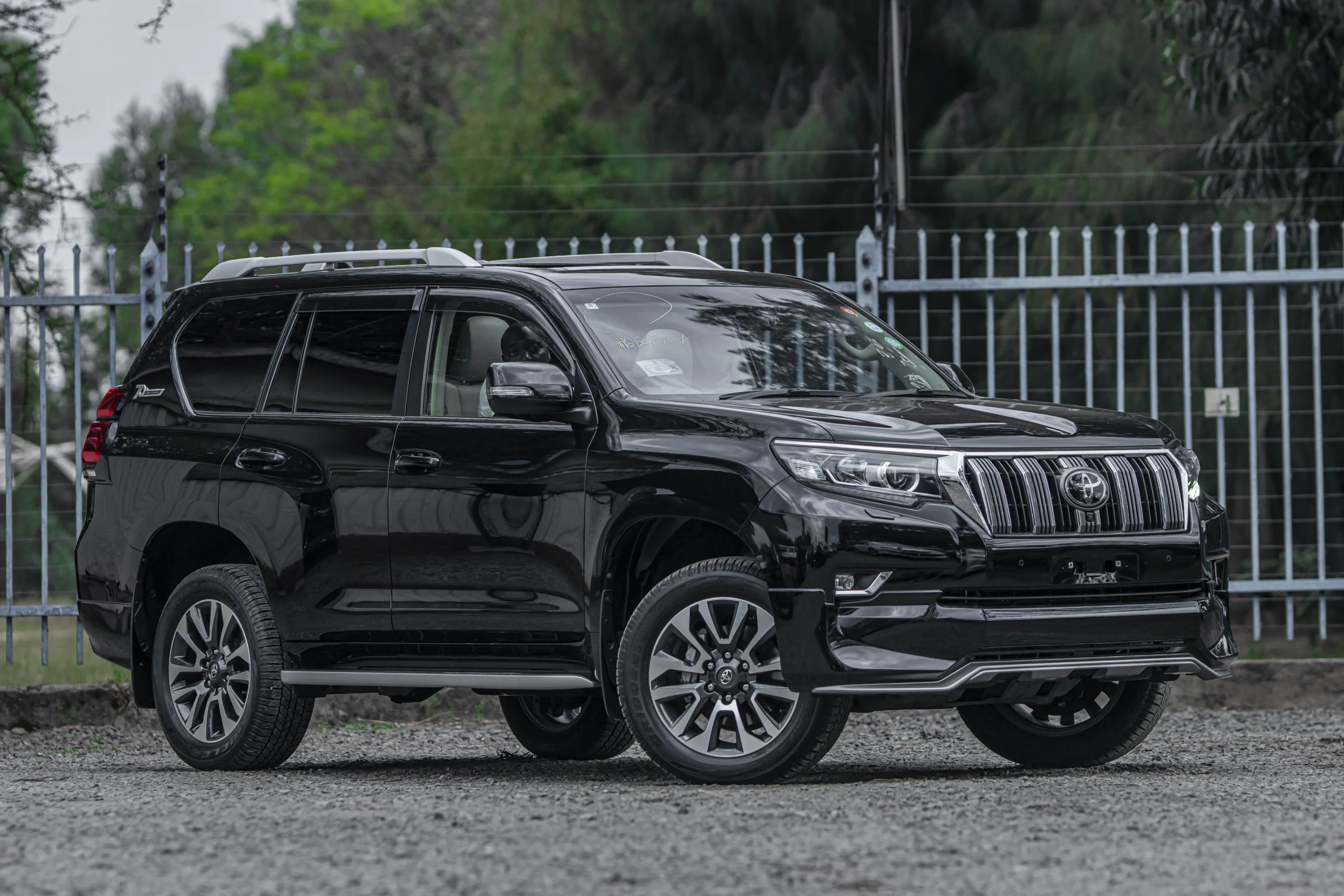
Cost of Running a Prado on Petrol: Calculations and Savings
To put the prado petrol fuel consumption into perspective, let’s consider a typical Kenyan driver covering 15,000 km annually, with petrol averaging Ksh 190 per litre (a dynamic figure, but useful for calculation).
If this driver owns a 2.7L Prado averaging 8.5 Km/L, their annual fuel requirement is approximately 1,765 litres, translating to an annual expenditure of about Ksh 335,350.
Now, compare this to a 4.0L Prado averaging 7.5 Km/L; that driver requires 2,000 litres, costing Ksh 380,000 annually.
This Ksh 44,650 difference per year clearly illustrates why the engine choice heavily influences long-term running costs and highlights the need for precise planning before committing to a purchase.
These calculations become even more relevant when considering the initial purchase price, and this is where the advantage of direct importation through a trusted partner like Enan Motors truly shines.
When buying from local Kenyan yards, the price often includes numerous overheads, storage fees, and exaggerated profit margins, sometimes adding hundreds of thousands of shillings to the final cost compared to importing the same quality, low-mileage vehicle directly from the source market.
By eliminating these unnecessary markups and choosing exactly the specification you need—be it the efficient 2.7L or the powerful 4.0L—you ensure that the savings made during the purchase phase can easily offset the slightly higher operational costs of a large SUV like the Prado over its lifespan in Kenya.

Tips to Improve Your Prado’s Fuel Efficiency
Improving the fuel efficiency of your petrol Prado doesn’t require complex modifications; it mainly involves diligent maintenance and smart habits.
First, religiously monitor your tire pressure; under-inflated tires increase rolling resistance significantly, forcing the engine to expend more energy, which is a common oversight among busy drivers in Kenya.
Secondly, adhere strictly to the service schedule using high-quality oil and genuine filters, as a clean air filter and fresh spark plugs ensure optimal combustion, directly preventing unnecessary fuel wastage, which is especially important for vehicles tackling dusty Kenyan roads.
Thirdly, minimize unnecessary weight; periodically clearing out heavy, seldom-used items from the boot or removing roof racks when they are not in use can offer a noticeable uplift in your average kilometers per litre.
Beyond maintenance, choosing the right support partner is vital to maintaining efficiency over the long run, especially immediately after importation.
At Enan Motors, we believe in starting off right, which is why we offer transparency regarding the vehicle’s history, ensuring our clients receive vehicles that are mechanically sound and less likely to suffer from efficiency-sapping defects common in poorly graded imports.
If you are struggling to find a clean, reliable, and efficiently running Prado specification locally, we invite you to review our current Inventory of available cars and discuss your specific requirements with our expert team today; don’t settle for a local yard car with questionable history when you can source a high-quality model directly from Japan.
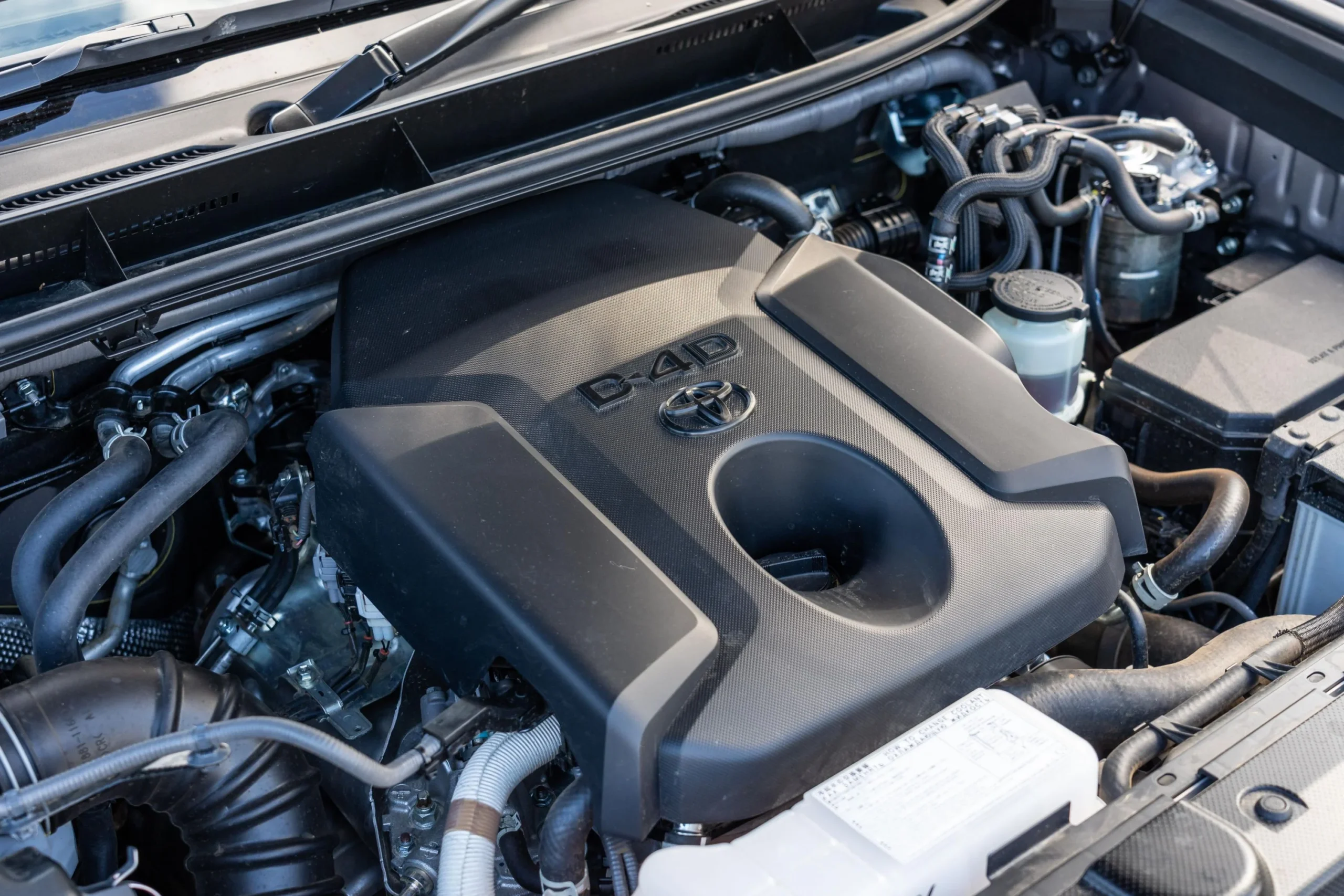
Environmental Impact of Prado Petrol Consumption
While the focus on fuel consumption often revolves around the cost to the wallet, it is also important for conscious Kenyan consumers to consider the environmental impact, particularly the greenhouse gas emissions associated with running a large petrol V6 SUV.
The 4.0L V6 Prado, due to its higher consumption rate, naturally produces a greater carbon footprint per kilometer compared to the 2.7L four-cylinder version, contributing more pollutants to the air, which is a consideration for environmentally minded buyers in Nairobi.
Although modern petrol engines are far cleaner than older diesel counterparts, choosing the smaller engine not only saves money at the pump but also marginally reduces the vehicle’s environmental burden, aligning personal choice with broader sustainability goals.
For those who desire the size and safety of the Prado but wish to mitigate environmental concerns, considering a very late-model import with the most up-to-date emission control technology is advisable, as these vehicles often feature better catalytic converter systems and optimized engine mapping.
Furthermore, maintaining the vehicle diligently, as discussed, ensures that the engine is burning petrol as cleanly and efficiently as possible, minimizing harmful byproducts.
If you are ready to make an informed, environmentally responsible choice on your next Japanese import and require expert guidance on selecting the cleanest, most efficient engine variant, feel free to Message us on WhatsApp for personalized advice from our team.
Conclusion
Navigating the real-world fuel consumption of the Toyota Land Cruiser Prado petrol models in Kenya requires moving beyond manufacturer statistics and focusing on the crucial factors of engine choice (2.7L versus 4.0L), driving habits, and verifiable mechanical condition.
While the 2.7L offers superior economy, averaging 8.5–9 Km/L, the 4.0L provides unmatched power for demanding terrains, albeit at a higher cost of 7–7.5 Km/L.
By understanding these trade-offs and diligently maintaining your vehicle, you can manage the running costs effectively.
For those seeking absolute quality assurance and the best value, direct importation through a trusted partner like Enan Motors eliminates guesswork; we ensure you receive a clean, verifiable vehicle that guarantees optimal efficiency and long-term reliability.
To start the conversation about importing your perfect Prado, customized to your consumption and performance needs, please Call us today.

FAQ
- Is the 2.7L Prado petrol engine underpowered for Kenyan roads?
The 2.7L engine is perfectly adequate for urban and highway use, offering better fuel economy; however, the 4.0L V6 provides superior power for steep climbs or heavy off-road driving.
- How much is the fuel consumption difference between the Prado petrol and diesel variants?
The diesel Prado (3.0L D-4D) is generally more fuel-efficient than the petrol, often achieving 10-12 Km/L, making it a favorite for long-distance Kenyan travelers despite higher maintenance costs.
- Does the age of the Prado affect its fuel consumption significantly?
Yes, older generations (like the J120) and vehicles with high, unverified mileage often have worn components that drastically reduce fuel efficiency compared to newer, well-maintained imports.
- Why is buying a direct import better for checking a Prado’s fuel efficiency?
Direct imports from Japan come with verified auction sheets and history, allowing buyers to assess the vehicle’s true condition and mileage, ensuring they are not inheriting hidden mechanical issues that sabotage fuel economy.
- What speed is most fuel-efficient for the Prado on Kenyan highways?
Maintaining a steady speed between 80 km/h and 100 km/h generally keeps the Prado’s engine in its most efficient operational range, avoiding the high consumption associated with speeds above 120 km/h.