

Kenya’s Import Regulations (The 8-Year Rule)
Before you even browse a single auction sheet, you must internalize the core regulation governed by the Kenya Bureau of Standards (KEBS) under the KS 1515:2000 standard.
The rule is simple, yet often misapplied: the car must not be more than eight years old from the date of first registration to the date of importation into Kenya.
If your vessel docks in Mombasa in January 2026, the vehicle must have been first registered from January 1, 2019, onwards.
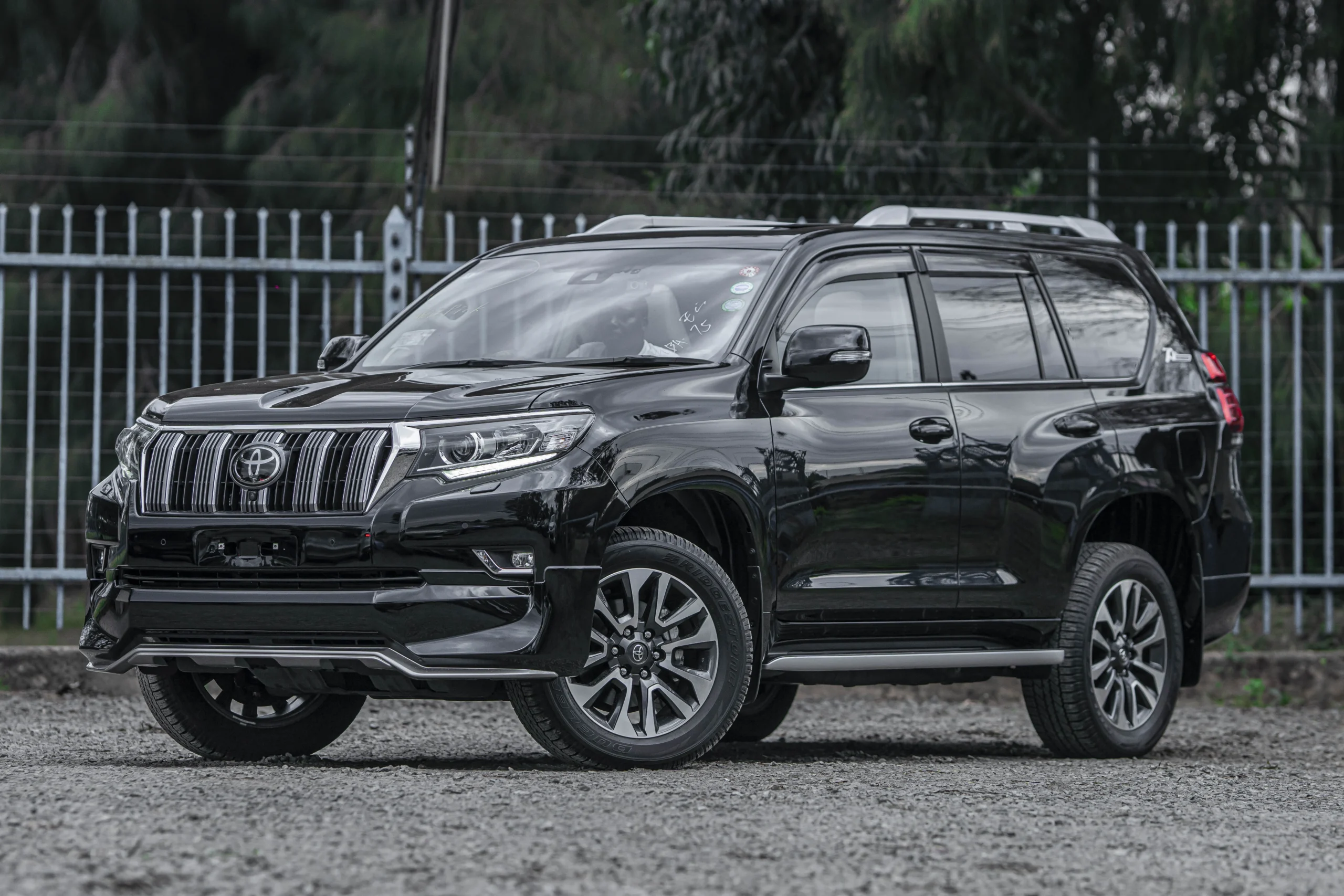
As an industry veteran, I advise clients to focus on 2019 models and newer, especially popular units like the Toyota Land Cruiser Prado or the Mazda CX 5, to allow for shipping delays and bureaucratic processing time.
Choosing a vehicle close to the cut-off date is an unnecessary risk that can lead to massive penalties or even forced re-exportation, a costly exercise you want to avoid entirely.
The Non-Negotiable Requirements Checklist
- Age Limit: Vehicle manufactured in 2019 or later (for 2026 imports).
- Left-Hand Drive Prohibition: Only Right-Hand Drive (RHD) vehicles are allowed.
- QISJ Inspection Certificate: Mandatory clearance certificate issued in Japan.
- Minimum Quality: The car must pass the KEBS quality standards.

Step 1: Selection, Verification, and CIF Finalization
The biggest advantage of direct importation is bypassing the local car yard markup.
When you work with a trusted importer like Enan Motors, the process starts with selecting a vehicle directly from the Japanese wholesale auctions or dealer stock.
This ensures complete transparency.
We insist on supplying the original Japanese auction sheet, which details the car’s true condition and mileage (e.g., Auction Grade 4 or 4.5 is excellent).
Never buy a car without this document; it is your defense against odometer tampering—a rampant issue in the local Nairobi market.
Calculating the CIF Value
The Cost, Insurance, and Freight (CIF) value is the single most important figure in the entire import procedure because it dictates your final KRA duty payment.
CIF is calculated by summing the vehicle’s purchase price (FOB), the marine insurance required for the voyage, and the freight charges (shipping).
Ensure your insurance coverage is adequate; while highly reliable, the sea voyage to Mombasa is a long one.
If you are currently researching vehicles, we recommend reviewing our vast Inventory to see the available cars that meet the strict 2019-plus requirement.
This is the stage where you lock in your best deal.

Step 2: The Mandatory Pre-Export Inspection (QISJ)
Once the car is purchased, it must undergo a comprehensive pre-shipment inspection conducted by authorized agents like the Quality Inspection Services Japan (QISJ) or the Japan Export Vehicle Inspection Centre (JEVIC).
This inspection verifies both the mechanical soundness and the age of the vehicle.
If the car fails QISJ, it cannot be loaded onto the vessel.
The inspection is meticulous, checking the undercarriage for rust (which impacts resale value in coastal areas like Nyali), confirming emissions standards, and verifying the chassis number against the deregistration document.
Once passed, QISJ issues the Certificate of Roadworthiness, a document critical for customs clearance back in Kenya.
It is vital to confirm that the QISJ certificate is valid before the vessel departs Japan.
Failure to present this document at the Port of Mombasa will result in an expensive reinspection conducted by KEBS officials, leading to demurrage costs and frustrating delays.

Step 3: The Ocean Voyage and Arrival at Mombasa Port
Most vehicles destined for Kenya are transported via Roll-on/Roll-off (Ro-Ro) vessels, which are designed specifically for carrying large numbers of cars.
The journey from major Japanese ports like Yokohama or Kobe to the Port of Mombasa generally takes between three to four weeks, depending on the shipping line schedule.
During this transit time, the importer (Enan Motors) and your clearing agent prepare the necessary import documentation:
- The original Bill of Lading (B/L).
- The original QISJ Certificate.
- The Commercial Invoice and Japan Deregistration Certificate.
- Import Declaration Form (IDF) processed via KRA iTax.
Upon arrival, your vehicle will be offloaded and placed in a designated storage area within the port.
The clock starts ticking immediately: port storage fees (demurrage) can escalate quickly if the clearing process is delayed.
An efficient agent is paramount here.

Step 4: Mastering KRA Valuation and Duty Payment
This stage is where technical expertise pays dividends, as the Cost, Insurance, and Freight (CIF) value must be converted into the final Customs Value and subjected to KRA’s complex duty structure.
KRA uses its own internal valuation template, often derived from benchmark prices, to calculate the applicable duty, not just the price you paid the seller.
The calculation relies on the Customs Value (CV), which KRA determines.
The import duty structure remains:
How Import Duty is Calculated
- Import Duty (ID): 25% of the Customs Value (CV).
- Excise Duty (ED): 20% of (CV + ID).
- Value Added Tax (VAT): 16% of (CV + ID + ED).
- Import Declaration Fee (IDF): 2.25% of the CIF value (Minimum KES 5,000).
- Railway Development Levy (RDL): 1.5% of the CIF value.
Once these figures are calculated, the clearing agent files the Customs Form Document (CFD) through the KRA iTax system.
You must receive the Pay-In Slip and pay the duty directly to the authorized banks before the vehicle can be released from the port.
For high-value imports, such as a Lexus LX 600 or a Mercedes Benz model, this payment often runs into millions of shillings and must be handled with extreme care.
Expert Tip: Always insist on paying the duty to KRA yourself via the generated Pay-In Slip.
Never transfer the large duty amount to the agent’s personal account to prevent fraud.

Step 5: Clearing, Registration, and Logbook Transfer
Once the duty is paid, the next step is physical clearing at the Port of Mombasa.
Your clearing agent secures the KRA release order and coordinates with the Kenya Ports Authority (KPA) to move the vehicle out of the port shed.
This is often the most time-sensitive phase due to the accruing demurrage fees.
After being cleared, the vehicle is often transported by car carrier (or driven) to Nairobi.
Upon arrival at Enan Motors premises, the final technical step is electronic registration via the NTSA system, which integrates with KRA’s iTax platform.
Issuance of the Kenyan Number Plate and Logbook
The registration process involves:
- Allocation of the new Kenyan number plate (e.g., KDX, KDY series).
- Generating the electronic logbook in the buyer’s name.
- Physical vehicle inspection by NTSA (often delegated).
The logbook transfer is finalized, signaling the official transition of ownership.
At this point, your imported vehicle—whether it’s a popular Honda Vezel or a reliable Mitsubishi—is ready to hit the Nairobi Expressway or cruise the coastal roads.
If you feel overwhelmed by the technicalities of the Customs Value calculation or the pressure of avoiding demurrage, let our team handle the headache.
We manage the entire process, from auction bid in Japan to key handover in Kenya. Call us today to discuss your specific import needs.
The Enan Motors Advantage: Transparency and Cost Efficiency
In the Nairobi and Mombasa automotive landscape, direct importation through a reputable agent is the smartest way to acquire a high-quality, low-mileage Japanese vehicle.
We eliminate the middlemen and the associated costs—meaning you save significantly while gaining verifiable quality.
We specialize in sourcing vehicles that offer high resale value in the Kenyan market, focusing on reliable models from Toyota and Lexus, and luxury brands like BMW and Volkswagen.
Our peer-to-peer expertise ensures the duty estimate provided is as accurate as possible, preventing unexpected financial shocks during clearing.

Conclusion
Importing a car from Japan to Kenya is a rewarding process that guarantees superior vehicle quality and significant cost savings, provided you strictly adhere to the regulatory framework.
The key to a smooth process lies in accurate documentation, adherence to the 8-year age rule, and efficient handling of the KRA valuation.
By choosing Enan Motors, you leverage our 15 years of ground expertise to navigate the Port of Mombasa logistics and complex duty calculations, giving you peace of mind from auction house to logbook transfer.
Ready to start the process with a guaranteed genuine auction sheet? Message us on WhatsApp for a detailed quote on your desired vehicle model.

FAQs
- What is the primary restriction for car imports into Kenya?
The primary restriction is the 8-year rule, meaning the vehicle must not be older than eight years from the date of manufacture to the date of arrival in Mombasa. - What is the current model year allowed for imports landing in 2026?
For imports landing in 2026, the car must have been manufactured in January 2019 or later. - How long does the import process take from Japan to Kenya?
Typically, the entire process takes 6 to 8 weeks: 1-2 weeks for sourcing/inspection and 3-4 weeks for shipping, plus 1 week for clearing at the port. - What is the importance of the QISJ certificate?
The QISJ Certificate of Roadworthiness is mandatory and confirms that the vehicle meets KEBS safety and quality standards before shipment. - How does KRA calculate the duty on an imported car?
KRA calculates duty based on a standardized Customs Value (CV), which involves 25% Import Duty, 20% Excise Duty, and 16% VAT, plus smaller levies like IDF and RDL.