
Understanding the 8-Year Rule and Age Limits for 2026
The Kenyan government maintains a strict age limit policy for all imported used vehicles.
As we move into 2026, the “8-year rule” dictates that any vehicle arriving at the Port of Mombasa must have been manufactured in 2019 or later.
This is calculated based on the month and year of first registration.
Importing a car manufactured in 2018 or earlier in 2026 will result in a “rejection at the port,” where the vehicle is either destroyed at the owner’s expense or shipped back at a high cost.
It is vital to verify the production month on the Japanese export certificate before placing a bid.
Beyond the age limit, the vehicle must be right-hand drive (RHD) unless it is a specialized vehicle with prior exemption.
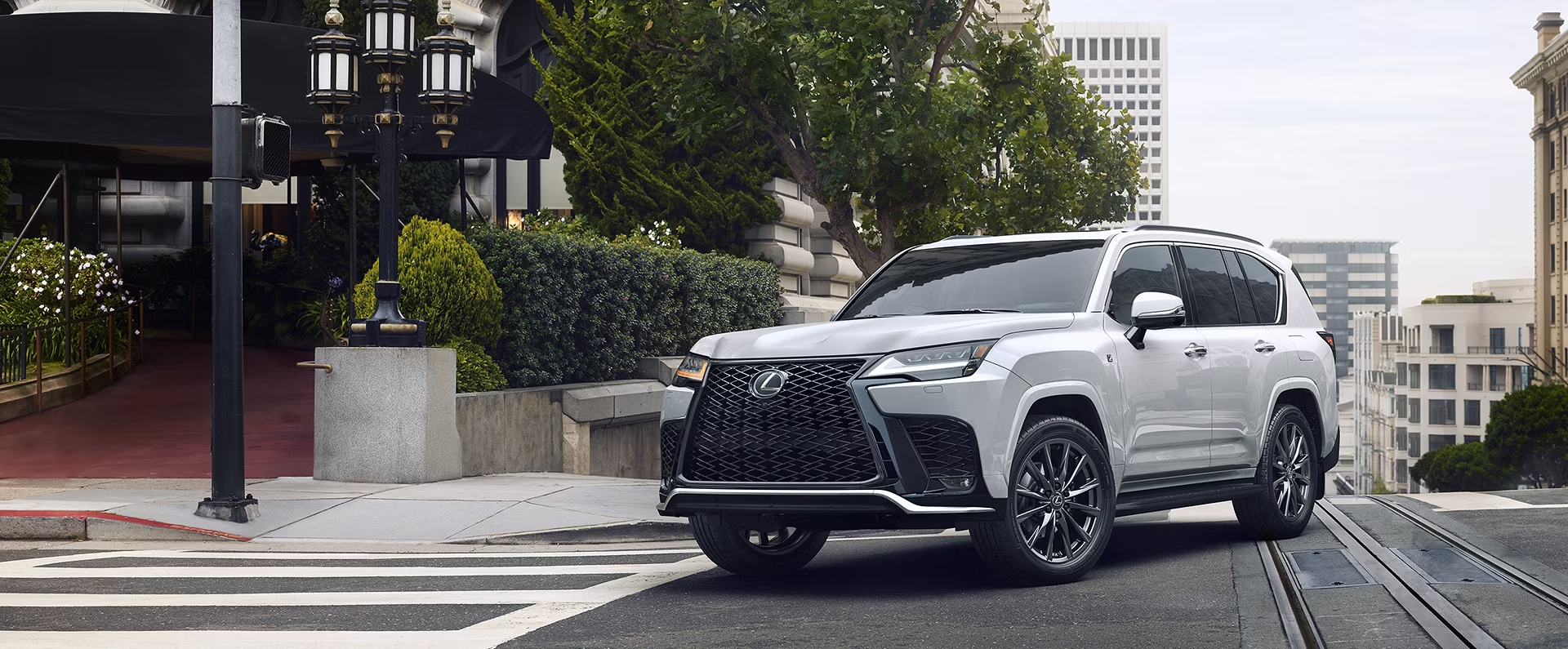
Many buyers eyeing a premium Lexus or a robust SUV often forget that the “year of first registration” in Japan might differ from the actual production year.
At Enan Motors, we verify the chassis number against Japanese manufacturing databases to ensure 100% compliance before the money leaves your pocket.
Sourcing from Japanese Auctions: Grading and Transparency
Japanese car auctions like USS, TAA, and CAA are the gold standard for quality.
However, navigating these requires an expert eye for “Auction Sheets.” A Grade 4.5 or Grade 5 vehicle is essentially in showroom condition, whereas a Grade 3.5 might have visible scratches or interior wear.
Kenyan buyers often get scammed by local “gray market” yards that roll back odometers.
When you choose the direct Import process, you receive the original auction sheet which serves as a forensic record of the car’s condition.
If you are looking for a reliable family crossover like the Mazda CX 5, the auction sheet will detail every minor blemish using codes like “A1” (small scratch) or “U1” (small dent).
This level of transparency is why more Nairobians are opting to wait 45 days for an import rather than buying a “locally used” unit with a mysterious history.
Whether you are looking at a sleek Mazda or a sturdy Mitsubishi, the auction grade is your first line of defense against “lemon” cars.
Interested in seeing what is currently available at the auctions?
Check our latest Inventory to see pre-verified units ready for shipping.
The Financial Blueprint: CIF Value and KRA Duties
Calculating the total cost of importation requires understanding the difference between the car’s price in Japan and the “landed cost” in Kenya.
The starting point is the CIF (Cost, Insurance, and Freight) value.
Once the car hits Mombasa, the Kenya Revenue Authority (KRA) applies duties based on the Current Retail Selling Price (CRSP).
The CRSP is a standardized price list KRA uses to value cars, regardless of what you actually paid in Japan.
The duty components include:
- Import Duty: 35% of the Customs Value.
- Excise Duty: 25% to 35% depending on the engine capacity (cc).
- VAT: 16% of the accumulated value.
- IDF (Import Declaration Fee): 2.5% of the CIF value.
- RDL (Railway Development Levy): 1.5% of the CIF value.
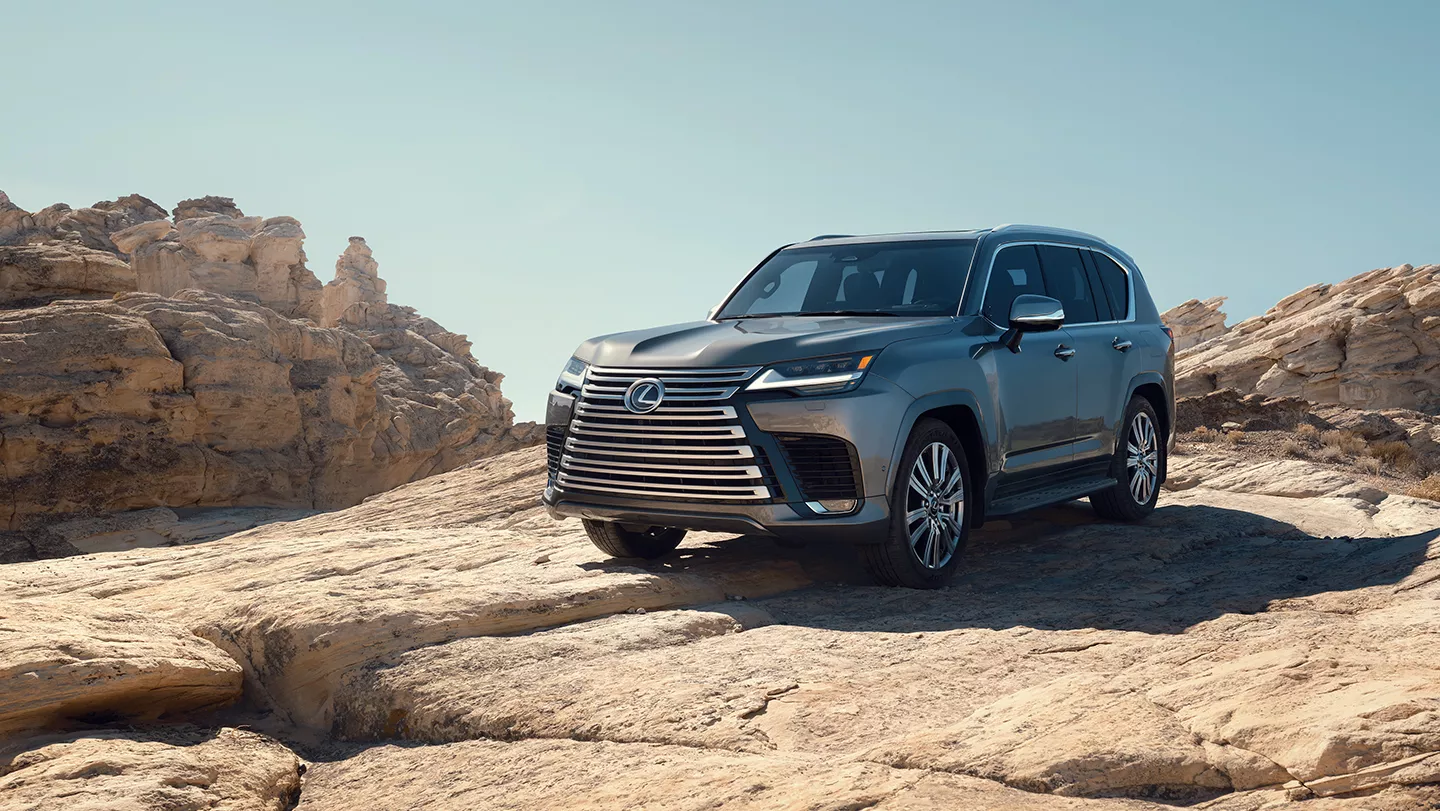
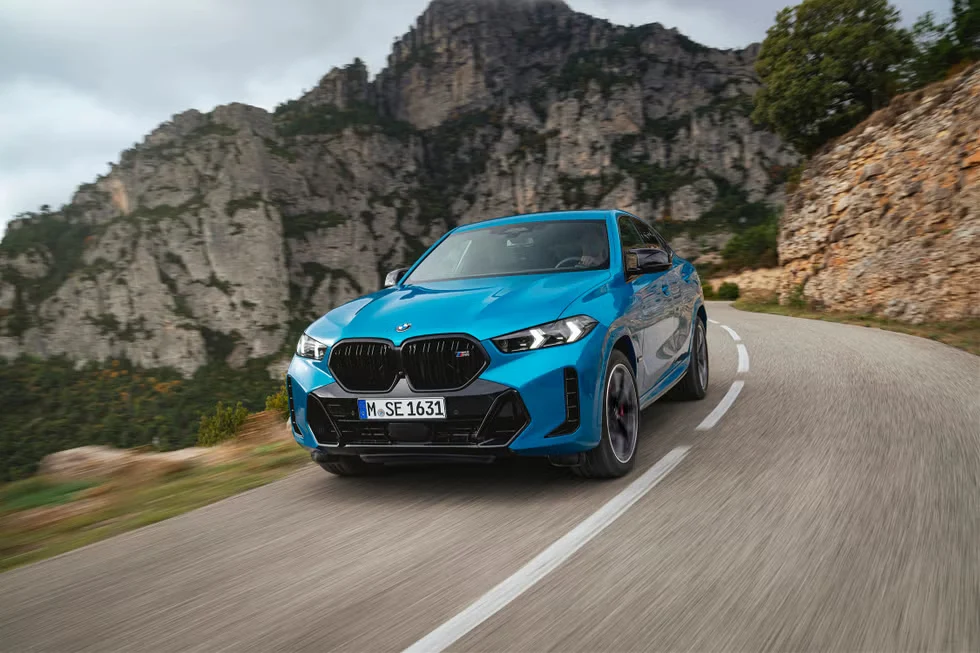
For a high-end luxury vehicle like the Lexus LX 600 or a BMW X6, the excise duty can be significantly higher due to larger engine sizes.
Conversely, smaller engines found in a Honda Vezel or a Volkswagen Polo are more tax-efficient, making them popular choices for those looking to maximize their budget without compromising on Japanese build quality.
Mandatory QISJ Inspection and Logistics
Before any car is loaded onto a vessel in Osaka, Nagoya, or Yokohama, it must undergo a mandatory inspection by Quality Inspection Services Japan (QISJ).
This is a legal requirement by the Kenya Bureau of Standards (KEBS).
The inspection ensures the vehicle is roadworthy, has no radioactive contamination, and that the odometer has not been tampered with.
If a car arrives in Mombasa without a QISJ certificate, you will face a heavy penalty—usually 20% of the CIF value—and the car must undergo a local inspection which is notoriously difficult to pass.
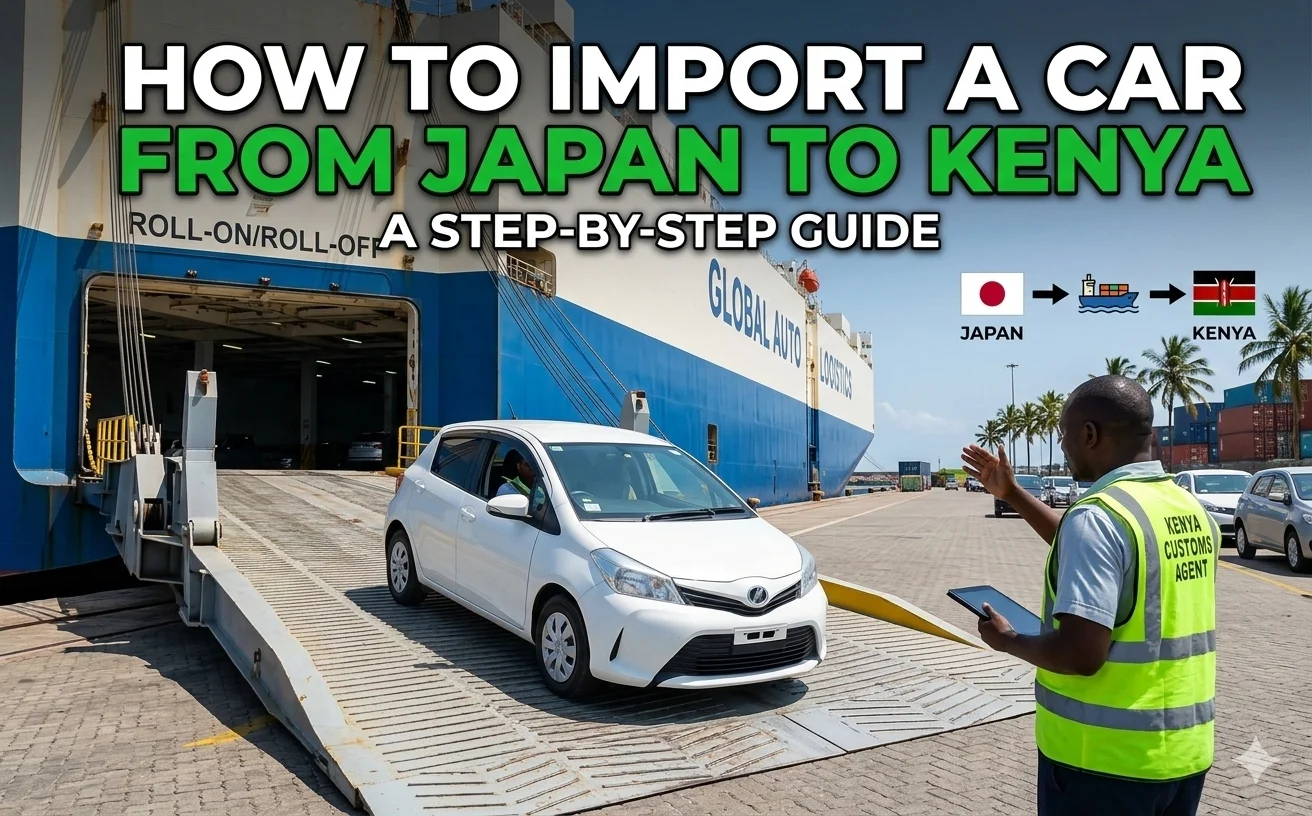
Shipping usually takes place via RORO (Roll-on/Roll-off) vessels, which are the most cost-effective for standard cars like a Toyota Harrier or a Mazda Axela.
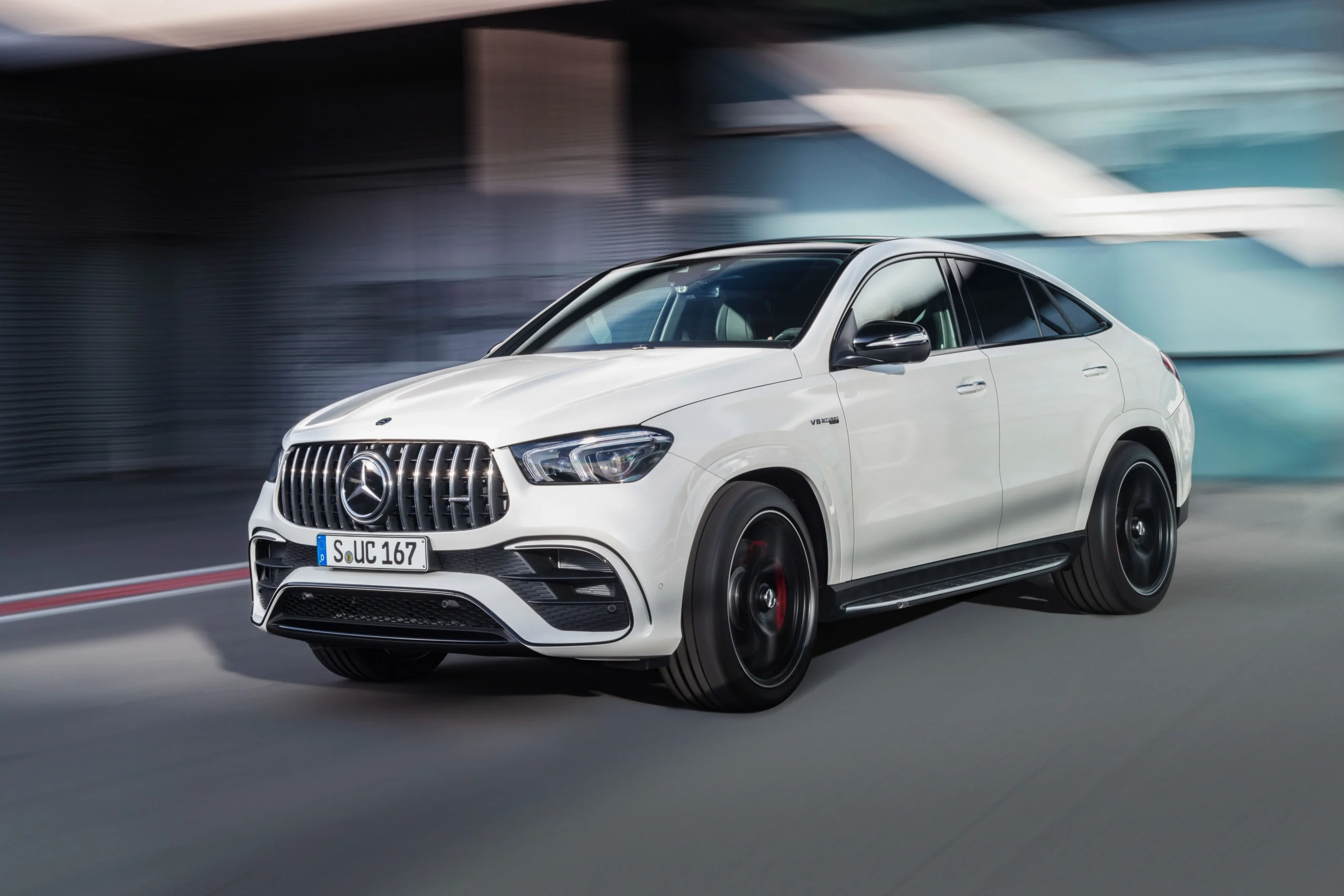
If you are importing a high-value asset like a Mercedes GLE, you might opt for containerized shipping to protect the vehicle from the elements and potential pilferage during transit.
Once the ship docks, the clearing process begins at the Container Freight Station (CFS) in Mombasa.
Need expert advice on which shipping method suits your budget? Message us on WhatsApp for a detailed breakdown of current freight rates.
The Clearing Process at the Port of Mombasa
Once the vessel arrives, your clearing agent will use the Bill of Lading and the QISJ certificate to lodge an entry into the KRA Trademar/iTMS system.
This is where the actual taxes are paid.
It is a common “street myth” in Nairobi that you can negotiate duties with KRA officers.
In reality, the CRSP system is automated and rigid.
After taxes are settled, the Kenya Ports Authority (KPA) charges and CFS fees must be paid before the car is released for registration.
The registration process involves the issuance of the physical number plates and the generation of the E-logbook via the NTSA TIMS (Transport Information Management System) portal.
If you are driving the car from Mombasa to Nairobi, ensure you have a “Transit Plate” and temporary insurance.
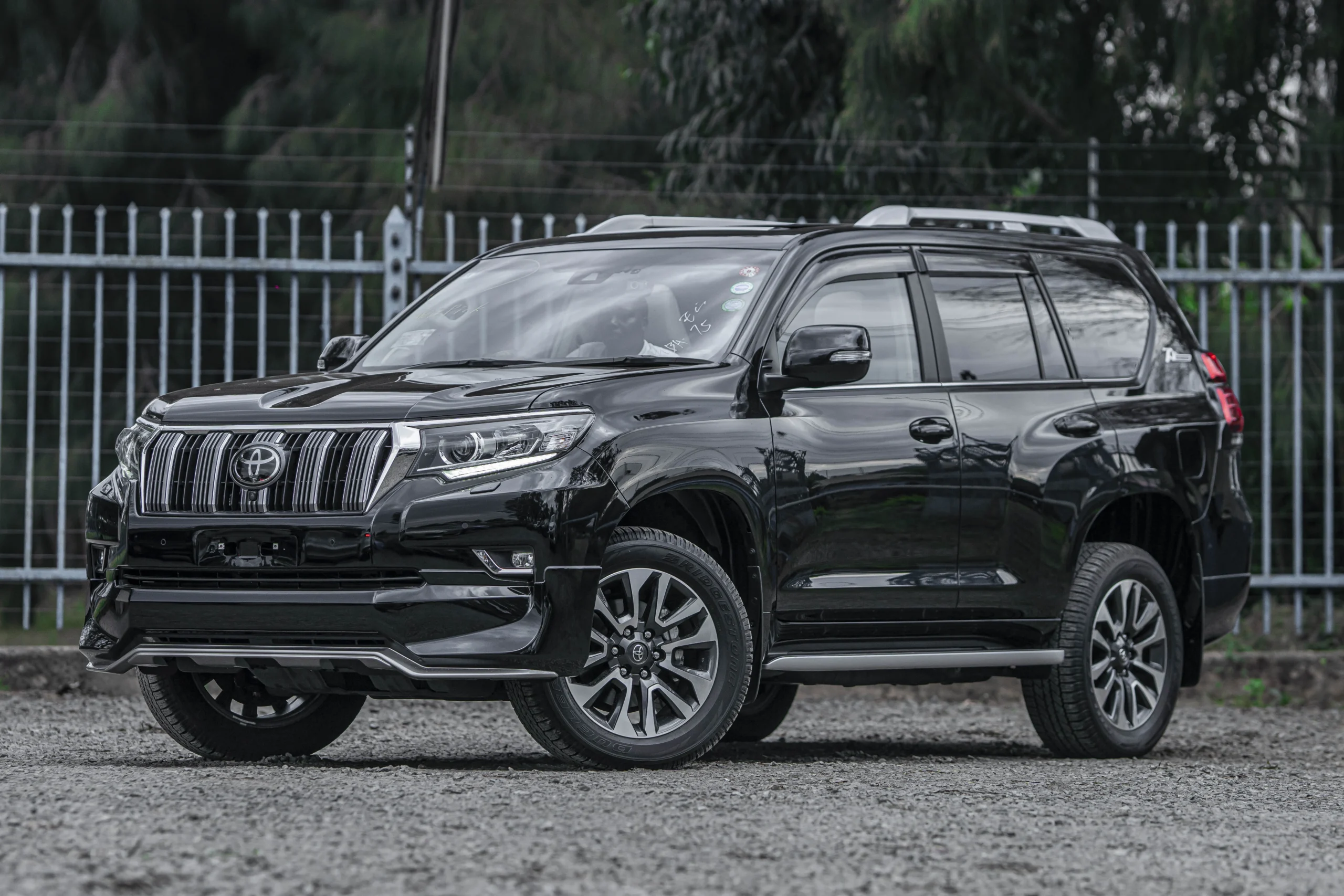
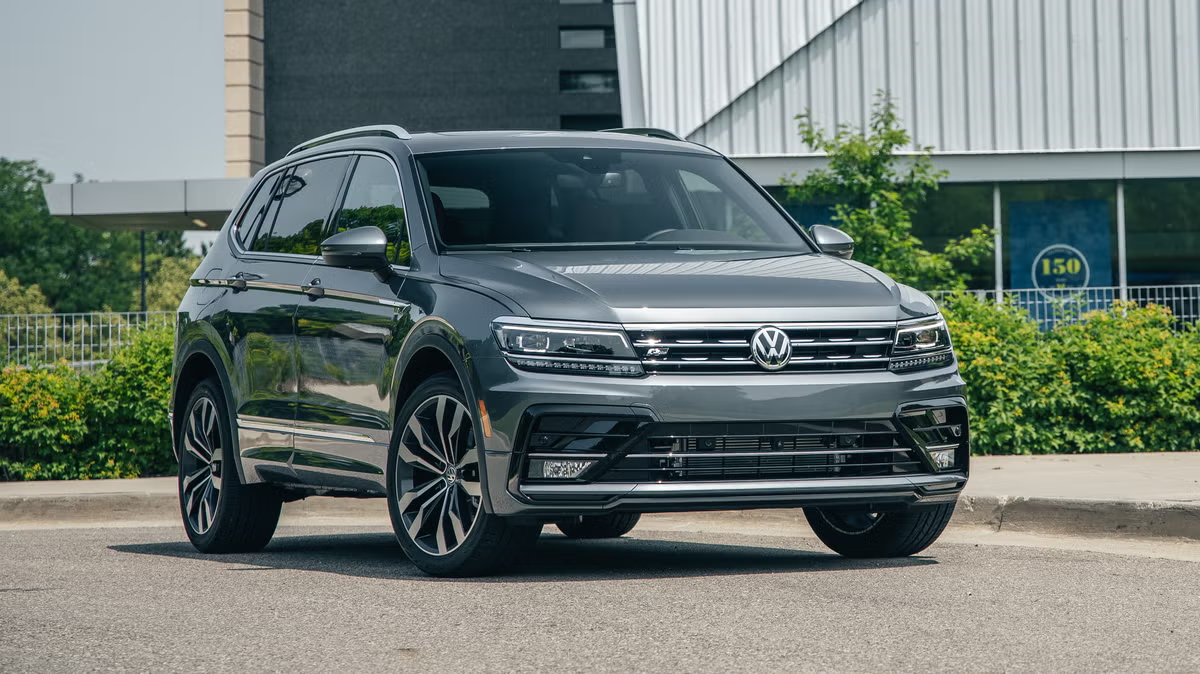
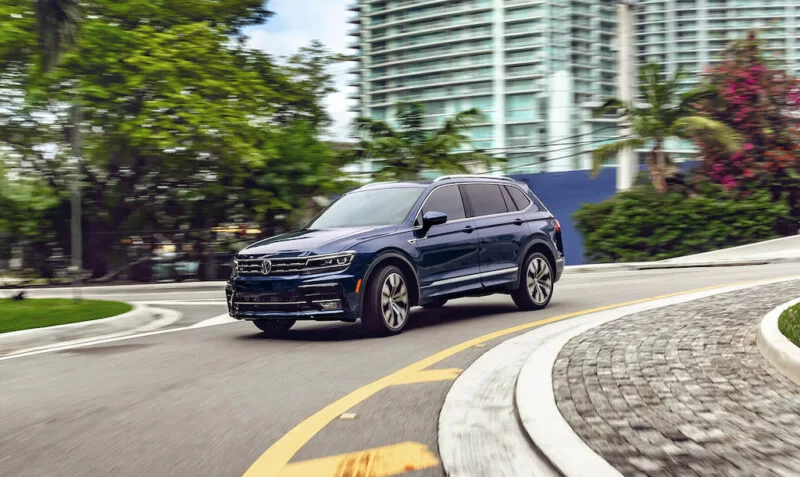
Many clients prefer to have their Toyota Land Cruiser Prado or Volkswagen Tiguan delivered via a car carrier to avoid the wear and tear of the Mombasa-Nairobi highway, especially before the first local service is done.
Why Enan Motors is Your Strategic Partner
The “realities on the ground” in the Kenyan car market are fraught with risks—from “cloned” logbooks to hidden accident repairs. About Enan Motors: we were founded on the principle of radical transparency.
We don’t just find you a Toyota; we find you the *right* unit that fits your lifestyle, whether you’re navigating the traffic in Upper Hill or cruising the Nairobi Expressway.
We provide a seamless end-to-end service.
This includes auction bidding, QISJ inspection, shipping, KRA duty payment, and final delivery to your doorstep in Nyali, Eldoret, or Karen.
Our advantage is our network in Japan which allows us to access “off-market” units that haven’t even hit the public auction sites yet.
This is particularly useful for clients seeking specific trims, like the Lexus NX250 or specialized BMW configurations.
By bypassing the local car yards, you save between KES 200,000 and KES 500,000 in dealer markups.
Furthermore, you gain the peace of mind that comes with being the first owner of the car in Kenya.
Whether it’s a high-performance Mercedes Benz or a reliable Honda, we treat every import as if it were our own.
Conclusion
Importing a car from Japan to Kenya is a sophisticated process that rewards those who prioritize technical due diligence over shortcuts.
By understanding the 8-year rule, mastering the KRA duty structure, and insisting on original auction sheets, you position yourself to own a high-quality vehicle at a fraction of the local retail price.
The Enan Motors advantage lies in our ability to bridge the gap between Japanese auctions and Kenyan roads with total transparency and expert logistics handling.
Ready to start your journey? Contact our team today to get a customized quote for your dream car.
Phone: Call us on 0723 328 339
WhatsApp: Message us on WhatsApp